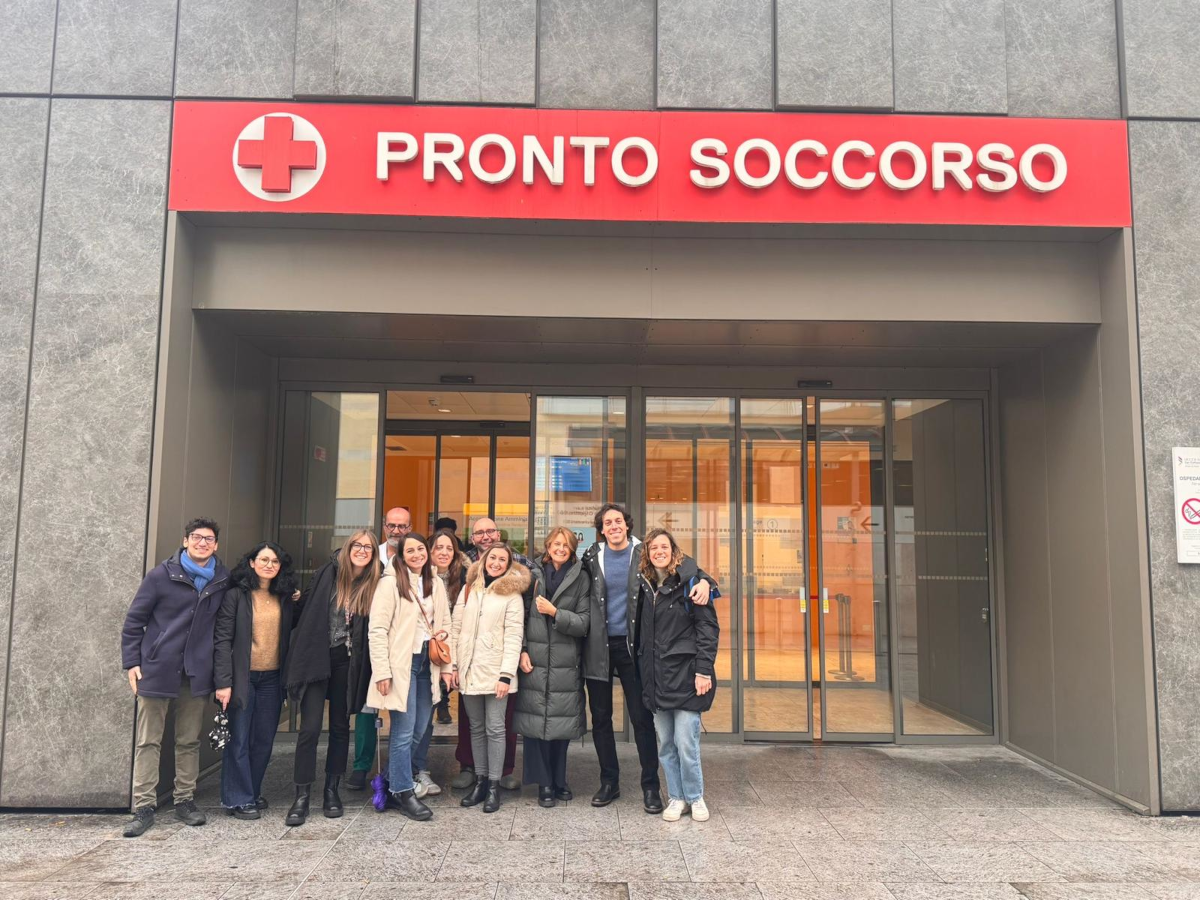
Italian hospitals are looking for more emergency physicians than the system trains each year. In November and December 2025 alone, Italian public hospital authorities published dozens of permanent staff-physician posts in this discipline in the Gazzetta Ufficiale (Italy's Official Gazette, where public job postings are announced), from the north of the country to the south. Anyone who completes this residency has real freedom to choose where and in what setting to work.
These career paths vary widely: the hospital emergency department, out-of-hospital emergency care, training and management roles, and clinical research.
The Hospital Emergency Department and the Path to Unit Leadership
The hospital Dipartimento di Emergenza e Accettazione (DEA, Emergency and Admission Department) is the main destination after an emergency medicine residency. The emergency physician handles the patient's initial assessment, clinical stabilisation, time-dependent emergencies, and the initial diagnostic and treatment plan. Unlike other specialties, there's no target organ or condition of choice: the emergency physician follows a method, applied to any clinical picture under critical conditions.
Italian DEAs are structured on two levels, and the level determines the type of caseload. Level I DEAs cover the most frequent emergencies and serve catchment areas of 150,000-300,000 people; level II DEAs, found in major urban centres, also integrate cardiac surgery, neurosurgery, vascular surgery, and paediatric and neonatal intensive care. The typical career path starts with clinical practice, moves through leading a clinical unit, and can lead to the role of primario (department head).
In public competitive examinations for staff physician posts in emergency departments, the Ministry of Health recognises several related disciplines as equivalent to emergency medicine: internal medicine, geriatrics, cardiology, gastroenterology, and respiratory medicine. Physicians from these paths can therefore compete for the same positions, which widens the recruitment pool beyond emergency medicine specialists alone.
Out-of-Hospital Emergency Care: 118, Rapid-Response Cars and Helicopter Rescue
118 is Italy's out-of-hospital emergency system, with its dispatch centres, rapid-response cars (automediche) and advanced life support ambulances, and it represents a different working environment for the emergency physician than the DEA. The clinical skills required are the same, but resources are more limited and there's no back-up team within reach. The shortage of doctors in the out-of-hospital system is structural: according to data from the Società Italiana Sistema 118 (Italian 118 System Society), around 2,300 doctors were active in 2023 against an estimated need of 6,000.
Helicopter rescue is the most selective destination within out-of-hospital emergency care. Emergency department experience alone isn't enough to work here: it requires specific certified training, the HEMS course (Helicopter Emergency Medical Service), covering modules on trauma, in-flight airway management, rendez-vous procedures, and stabilising the patient on board. Once certified, continuing training is mandatory every six months.
Available positions are few and selection is competitive, but anyone choosing this career starts with a concrete advantage if their residency included placements with AREU (Lombardy's emergency healthcare agency) and on Mezzo di Soccorso Avanzato (advanced life support ambulance) crews, as UniSR's programme does.
Management, Training and Coordination Roles
Not every emergency physician stays in the emergency department for their whole career. Some move into management roles: running the DEA's care pathways, implementing clinical protocols, coordinating the response to mass-casualty events. These are functions that require solid clinical experience and, often, additional training in healthcare management.
Other emergency physicians become instructors. Clinical simulation has become increasingly important in recent years, in Italy too, and the Ministry of Health has identified the shortage of specialised trainers as one of the main obstacles to its wider use. Emergency medicine is one of the specialties best suited to simulator-based teaching, because the skills it requires are procedural, certified and measurable. They can be taught, assessed and repeated in a controlled setting. UniSR already works in this space through its own Simulation Lab, which also covers emergency medicine.
Academic Research and Humanitarian Medicine
Emergency medicine has well-established international research areas, covering topics such as out-of-hospital cardiac arrest, sepsis, trauma, and Point-of-Care Ultrasound applied to rapid diagnosis. For those who want to combine research and clinical work, working at an IRCCS such as San Raffaele Hospital means having access to research networks and experimental protocols even during residency.
There's also a less conventional direction. In recent years, emergency medicine has found application in settings very different from the metropolitan DEA: hospitals in resource-limited areas, as well as search-and-rescue operations at sea. UniSR residents have access to these external placements, with CUAMM in Sierra Leone and Ethiopia, and in collaborations with Mediterranea Saving Humans. It isn't a path for everyone, but emergency medicine is one of the specialties whose skills transfer best to resource-scarce conditions, and that opens possibilities few other disciplines offer.
A Specialty With Career Paths That Cut Across Settings
Emergency medicine offers very different working environments: a large metropolitan DEA, a regional emergency department, a 118 dispatch centre, helicopter rescue, medical research, a humanitarian posting. These are paths that call for different aptitudes. And with demand for emergency physicians outstripping supply every year, the freedom to choose is real.