28 Jul, 2026
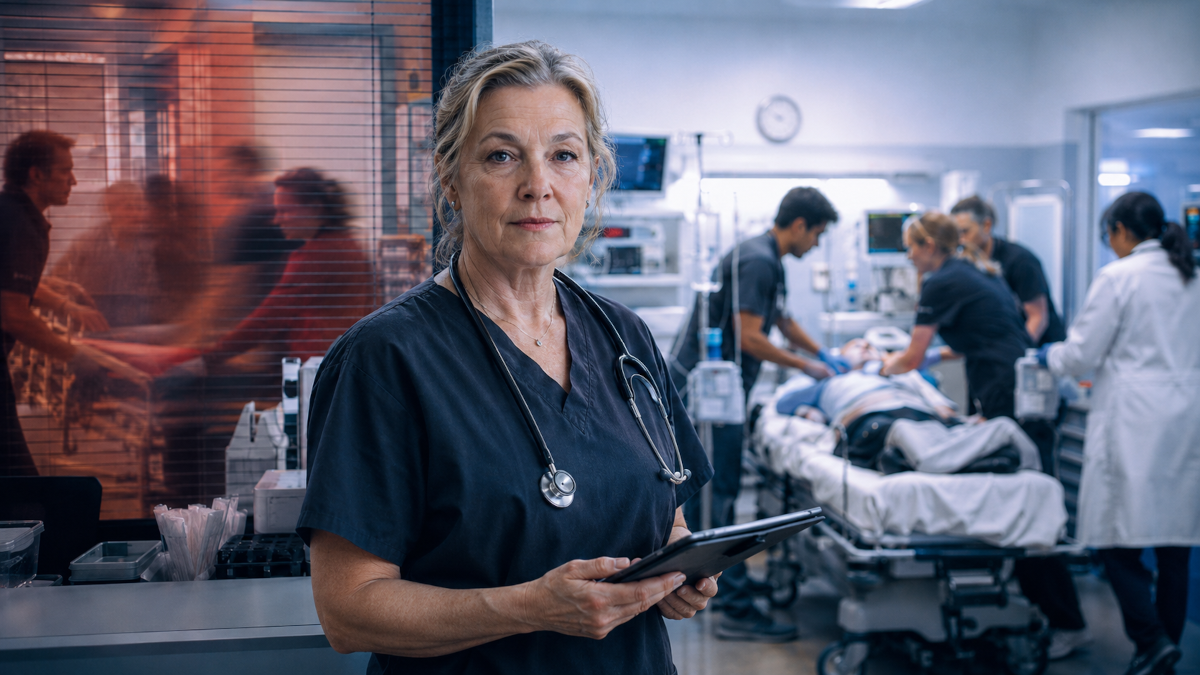
In the daily practice of an emergency department, urgent and emergency cases come down to one thing above all: teamwork. At UniSR's Emergency Medicine Residency Programme, directed by Prof. Paola Maffi, the first skill residents need to learn is exactly that: working alongside other professionals, inside and outside the emergency department. This comes from a direct conversation with the programme's Director, who has spent years training future emergency physicians.
But what actually distinguishes an emergency from an urgent case? The official distinction comes from the national triage guidelines. An emergency is a condition where one or more vital functions are already disrupted or compromised: cardiac arrest, acute respiratory failure, shock. This is the red code: intervention has to be immediate, there's no time to lose. An urgent case is one where there's a risk that vital functions could become compromised, or where there are alarming symptoms and signs, but without that compromise having happened yet. This is the yellow code: intervention needs to come quickly, though not in the immediate seconds that follow. The system then has two lower tiers: the green code for less critical cases with no warning signs, and the white code for non-urgent cases.
Teamwork and Listening: the Reality Behind Urgent and Emergency Care
The emergency physician, Maffi explains, never works alone. They need to communicate quickly with a cardiologist when facing a heart attack, know when to call the anaesthetist in cases of respiratory failure, and consult surgeons and infectious disease specialists whenever the clinical picture calls for it. According to the Joint Commission, handovers, meaning handoffs of care between professionals, are associated with 80% of adverse events in hospitals. That's why communication matters so much.
The nurse's role, in this system, is just as central. «The emergency department nurse is essential», the Director notes, «because they set the triage code that determines each patient's care pathway». Effective, efficient collaboration, built on mutual respect and trust, has to be earned. It's never a given. «The nurse doing triage also has to be very well prepared: they need to tell the difference between a patient who can wait three hours and one who can only wait 15 minutes, which is really the difference between the white code and the yellow code», Maffi recalls. It's the professional role that governs access to care for every waiting patient, and it directly shapes the emergency physician's work.
Communication and End of Life: Learning to Be Clear, with Empathy
The same communication skills that let the emergency physician alert the cardiologist in time, or build an efficient working relationship with the nurse, matter outside the team too, when it's the patient and their family who need to understand what's happening. Serious cases arriving at the ED unaware of what's happening to them are more common than people might think. Sometimes, even when the diagnosis is already known, a patient living out their final days still feels the need to seek medical help at the emergency department. A study published in JAMA Network Open found that in the United States, deaths in the emergency department account for 11.3% of all deaths, and that one in three deaths nationally is preceded by an ED visit in the previous month.
Part of the training at UniSR's residency programme is dedicated to exactly this: explaining a serious diagnosis, or managing end-of-life care in the emergency department.
«A terminally ill patient can arrive at the ED and need to be told the real state of their illness. You have to be ready to talk to the patient themselves, and to their family too. An older patient might think they have a bad case of bronchitis when in fact they have metastatic lung cancer. Part of the emergency physician's role is explaining that there are no more curative treatments left to give, only palliative care for the pain. The other treatments have to be stopped», Maffi explains.
On this subject, Università Vita-Salute San Raffaele's Emergency Medicine Residency Programme runs dedicated seminars. A study published in the Western Journal of Emergency Medicine found that a short simulation course based on the SPIKES protocol, the most widely used framework for delivering bad news, improved trainee doctors' ability to hold these conversations by 33% compared with a control group.
San Raffaele Hospital (IRCCS) has also set up a dedicated physical space inside its emergency department for patients for whom active treatment is no longer an option. «The room was furnished to feel welcoming, with armchairs for relatives, pictures on the walls, a setting that doesn't feel oppressive», says the Director, who is planning to introduce a dedicated module on the psychological side of clinical communication for the next academic year.
Vocation in Emergency Medicine: What Makes the Difference
According to Maffi, the difference between physicians who keep working in the emergency department with energy and determination, and those who prefer to move on after a few years, comes down mostly to the motivation behind choosing an emergency medicine residency in the first place.
«Those who put this specialty down as their second or third choice are obviously less motivated. They wanted to become a cardiologist, or a neurologist, but didn't get the chance, and they often struggle to keep up their training with consistency and commitment», Maffi points out.
Physicians who choose the specialty out of genuine conviction, on the other hand, stand out right from the early years. «There are doctors who work in the ED out of vocation, who love being on the front line», Maffi observes, «and the difference shows both in their results during residency and in clinical practice once they've qualified».
What Personal Traits Help When Facing an Emergency?
When rapid decisions have to be made for the patient's sake, what helps most is a solid grounding in internal medicine, because the diagnosis has to come together quickly, even when the patient can't give a useful account of their own medical history. «We have to work from what we see, be able to examine the patient properly, and order the right tests straight away. That takes a very strong foundation in general medicine. It doesn't mean acting hastily, but speed is essential», the Director sums up.
A study published in Emergency Medicine Journal, involving more than 500 emergency physicians and paramedics, identified a recurring personality profile among people who work in emergency and urgent care: the “resilient crisis manager”, someone able to keep a clear head and make decisions under pressure. The study is careful to note, though, that personality traits within the group remain varied, and are close to those seen in physicians from other specialties.
A qualitative study published in PLOS ONE reaches a similar conclusion, drawing on the interviewed physicians' own words: they describe themselves as “introvert-extroverts”, where the introverted side supports study and diagnostic rigour, and the extroverted side allows them to lead the team through critical moments. Resilience, the ability to hold up under pressure, an inclination for teamwork: these are the same qualities Maffi observes in the day-to-day practice of UniSR's residency programme.
Myths About Working in the Emergency Department
Working in the emergency department doesn't mean giving up your personal life. Full 12- or 13-hour shifts average 13-14 a month, out of 30 days, with proportionate time off, and the specialty is recognised as equivalent to internal medicine: down the line, physicians who no longer want to work ED shifts can apply for positions in departments such as geriatrics, gastroenterology or cardiology. They can't head those departments, but they can work there, and go on to become the department head's right hand.
International data on the specialty offer another perspective, too. The shift-based structure of emergency medicine, unlike specialties built around outpatient clinics and on-call phone duty, draws a clean line between work time and personal time: when the shift ends, so does clinical responsibility. Several international studies point to this as a structural advantage, and one of the reasons some physicians choose to become emergency doctors.
Research in Emergency Medicine: It Can Be Done
Until a few years ago, doing research in an emergency department like UniSR's was difficult, mainly because of the lack of dedicated staff: shifts took up all the available time, and many physicians worked both on the wards and in the ED. In Italy, there were very few emergency physicians. Over the past two years, the situation at San Raffaele Hospital has changed, with more emergency physicians on staff. According to Maffi, the number of residency theses based on research carried out in the hospital's emergency department has grown from one or two a year to eight. There's also an active research protocol on traumatic brain injury, assessing the level of a new protein as a possible early indicator of how brain injuries develop.
One open question remains: the academic career path for those who specialise in emergency medicine. Journals in the field currently have a lower average impact factor than those in internal medicine, which makes an academic career harder for those who choose this specialty. Together with directors from other Italian specialty schools, though, Maffi helped found a scientific society dedicated to strengthening academic recognition for the discipline, something already well established in other countries. «We're building that in Italy, with the goal of growing it over the coming years», says the Director.
San Raffaele Hospital is classified as a level II DEA, with every specialty present except a dedicated trauma centre, and the ability to treat patients on ECMO (extracorporeal membrane oxygenation). This, too, can support research.
Find out more about how UniSR's Emergency Medicine Residency Programme is organised.
Bibliography
Servotte JC et al., "Efficacy of a Short Role-Play Training on Breaking Bad News in the Emergency Department." Western Journal of Emergency Medicine, 2019 Oct 14;20(6):893-902. DOI: 10.5811/westjem.2019.8.43441. PMID: 31738716.
Elmer J et al., "Death and End-of-Life Care in Emergency Departments in the US." JAMA Network Open, 2022 Nov 1;5(11):e2240399. DOI: 10.1001/jamanetworkopen.2022.40399. PMID: 36331501.
Goldin J. "Medical Error Prevention and Root Cause Analysis." In: StatPearls [Internet]. Treasure Island (FL): StatPearls Publishing; updated 31 January 2026. PMID: 34033400.
Pajonk FG et al., "Personality traits of emergency physicians and paramedics", Emergency Medicine Journal, 2011;28(2):141-146. DOI: 10.1136/emj.2009.083311.
Kase J, Doolittle B, "Job and life satisfaction among emergency physicians: A qualitative study", PLOS ONE, 2023;18(2):e0279425. DOI: 10.1371/journal.pone.0279425
Written by

UniSR Communication Team
Thanks to the contribution of the various team members, the UniSR Marketing and Communications Service deals with the multiple communication areas of the University: news scouting, creation of news, audio and video, event organization, website management and institutional social media, drafting and publication of newsletters, support for institutional relations. The Service interacts with all the main stakeholders (students, teachers, technical and administrative staff, research community, territory) in order to support and potential communication (internal and external) of the initiatives related to teaching, research and public engagement.
Visit the author's page