25 Jun, 2026
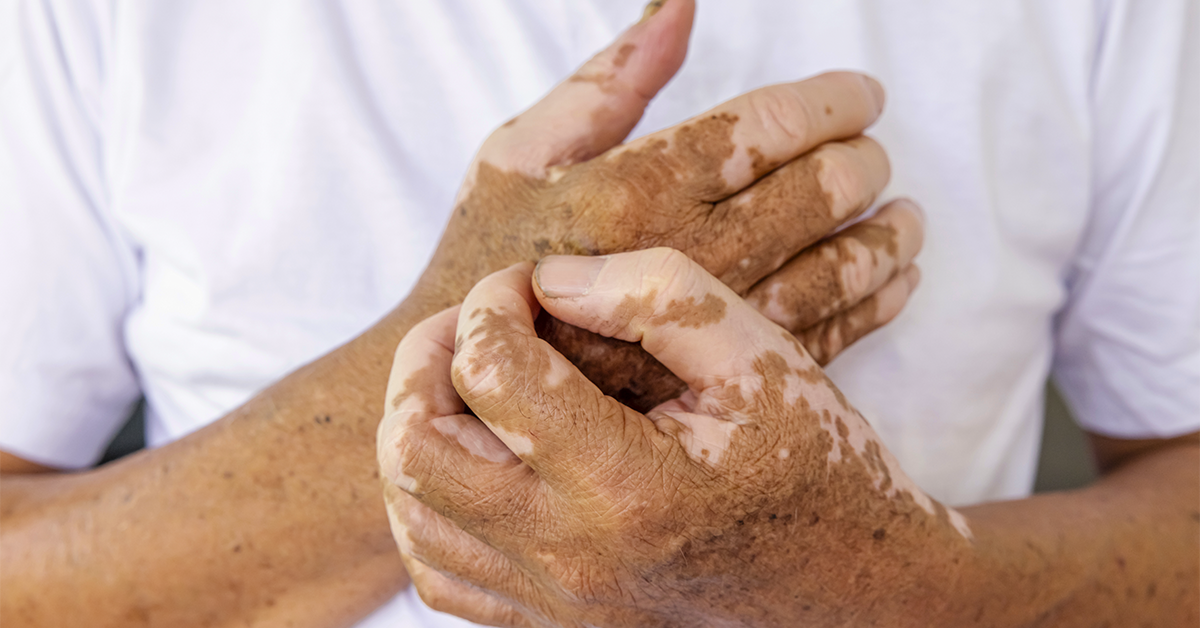
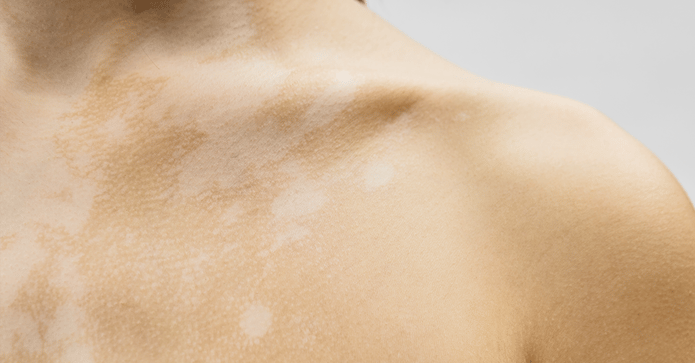
Vitiligo is an autoimmune disease that destroys melanocytes, the cells responsible for skin pigmentation, and affects between 0.5 and 2% of the world’s population. Behind the characteristic depigmented patches lies a complex network of biological mechanisms involving the immune system, genetic predisposition and the skin’s cellular environment, a complexity that research has begun, in recent years, to decode with concrete clinical results.
That research has turned vitiligo into a textbook case of how molecular understanding can drive therapeutic development. Prof. Franco Rongioletti, Full Professor of Dermatology at Vita-Salute San Raffaele University (UniSR) and Head of the Clinical Dermatology Unit at IRCCS San Raffaele Hospital, outlines where it now stands.
When the immune system targets melanocytes
Vitiligo is driven by the loss of melanocytes, the cells that produce melanin and give the skin its colour. The most widely accepted model today identifies autoimmunity as one of the disease’s primary engines. «The immune system mistakenly attacks the melanocytes. This attack leads to the progressive disappearance of pigment-producing cells and the emergence of the characteristic depigmented areas» Prof. Rongioletti explains.
Research is working to clarify how this process unfolds and why it is triggered in certain individuals at certain points in their lives. The answer appears to lie in the interaction between genetic predisposition, environmental factors and dysregulation of the immune response.
Vitiligo and genetics: what genomic studies reveal
Among the most significant advances of recent years is the contribution of genomics, the discipline that studies genetic variation across populations. Identifying genetic variants associated with vitiligo has clarified the biological basis of the disease and confirmed the central role of immune regulation.
«Analyses of genes involved in immune response and melanocyte function have revealed genetic polymorphisms that can predispose certain individuals to developing the disease» the Professor notes.
Mapping the genes involved is more than a basic research exercise. Understanding which biological pathways are disrupted means identifying new therapeutic targets and laying the groundwork for increasingly personalised treatments.
Oxidative stress and the role of the cellular environment
Alongside the autoimmune component, there is growing interest in other factors that may contribute to melanocyte loss. Chief among them is oxidative stress, a condition in which the production of free radicals exceeds the body’s capacity to neutralise them.
Several studies have documented elevated markers of oxidative stress in vitiligo-affected skin, suggesting that cellular damage may make melanocytes more vulnerable and trigger the immune response. Oxidative stress, on this reading, is not an alternative mechanism to autoimmunity but one of the factors capable of initiating or amplifying it.
The idea that the disease arises from the convergence of multiple biological mechanisms is progressively replacing the more reductive interpretations of the past and is driving numerous current research programmes.
The skin microbiome: an emerging frontier
The cutaneous microbiome, the community of microorganisms that colonise the skin’s surface, is one of the most active areas of dermatological research. Several recent studies have suggested that alterations in microbiome composition can influence the local immune response and contribute to the development of inflammatory skin diseases, vitiligo included.
The field is still in its early stages, but it may offer new frameworks for understanding the interactions between the immune system and the skin environment.
How a therapy is built: the case of JAK inhibitors
The clearest illustration of the link between basic research and clinical application in vitiligo is the development of JAK inhibitors, a class of drugs that work by blocking proteins involved in the transmission of inflammatory signals within cells. By disrupting these pathways, the drugs reduce the immune activation that drives melanocyte destruction.
Their application to vitiligo followed a research trajectory rooted in the study of the immunological mechanisms underlying the disease. Several groups demonstrated that certain inflammatory molecules, notably interferon-gamma (IFN-γ), play a pivotal role in recruiting and activating the T lymphocytes that attack melanocytes. These signals are transmitted intracellularly via the JAK-STAT pathway, a molecular system that regulates the expression of multiple genes involved in the immune response.
«The discovery of its therapeutic role came from research that demonstrated the importance of the JAK-STAT pathway in regulating the immune response and in melanocyte survival» Prof. Rongioletti recalls.
Once this pathway was identified as a central node in the disease process, researchers hypothesised that blocking it could interrupt the cycle leading to melanocyte destruction. That hypothesis led to testing drugs already developed for other inflammatory and autoimmune conditions, among them ruxolitinib, an inhibitor of JAK1 and JAK2 proteins.
Clinical trial results showed that topical application of the drug can reduce local immune activity and, in many patients, promote skin repigmentation. In the TRuE-V1 and TRuE-V2 registrational trials, published in NEJM Evidence in 2022, approximately 30% of patients treated with topical ruxolitinib achieved significant facial repigmentation at 24 weeks, compared with placebo. Ruxolitinib stands as one of the most successful examples of translational medicine in contemporary dermatology: a discovery made in the laboratory that, through preclinical and clinical studies, reached clinical practice.
The questions that remain open
Despite the advances of recent years, much about the disease remains unclear. Why do some patients respond well to treatment while others see limited benefit? What factors drive disease progression? How do genetics, environment and immunity interact? «Variability in treatment response between individuals is an area that requires further investigation to improve the personalisation of therapies» Prof. Rongioletti observes.
These questions reflect a broader challenge in contemporary medicine: understanding biological differences between patients well enough to develop increasingly precise therapeutic approaches.
Towards more personalised medicine
Vitiligo research is advancing on several fronts simultaneously. Controlling autoimmunity remains the priority for halting disease progression; alongside this, interest is growing in strategies that can promote melanocyte regeneration and restore pigmentation.
Genomics, immunology, microbiome science and regenerative medicine are among the main active research threads. The aim is to understand, with increasing precision, the mechanisms that make each patient biologically distinct. That understanding, built at the intersection of curiosity-driven and translational research, is what will shape how treatment evolves.
Written by

UniSR Communication Team
Thanks to the contribution of the various team members, the UniSR Marketing and Communications Service deals with the multiple communication areas of the University: news scouting, creation of news, audio and video, event organization, website management and institutional social media, drafting and publication of newsletters, support for institutional relations. The Service interacts with all the main stakeholders (students, teachers, technical and administrative staff, research community, territory) in order to support and potential communication (internal and external) of the initiatives related to teaching, research and public engagement.
Visit the author's page