30 Jul, 2026
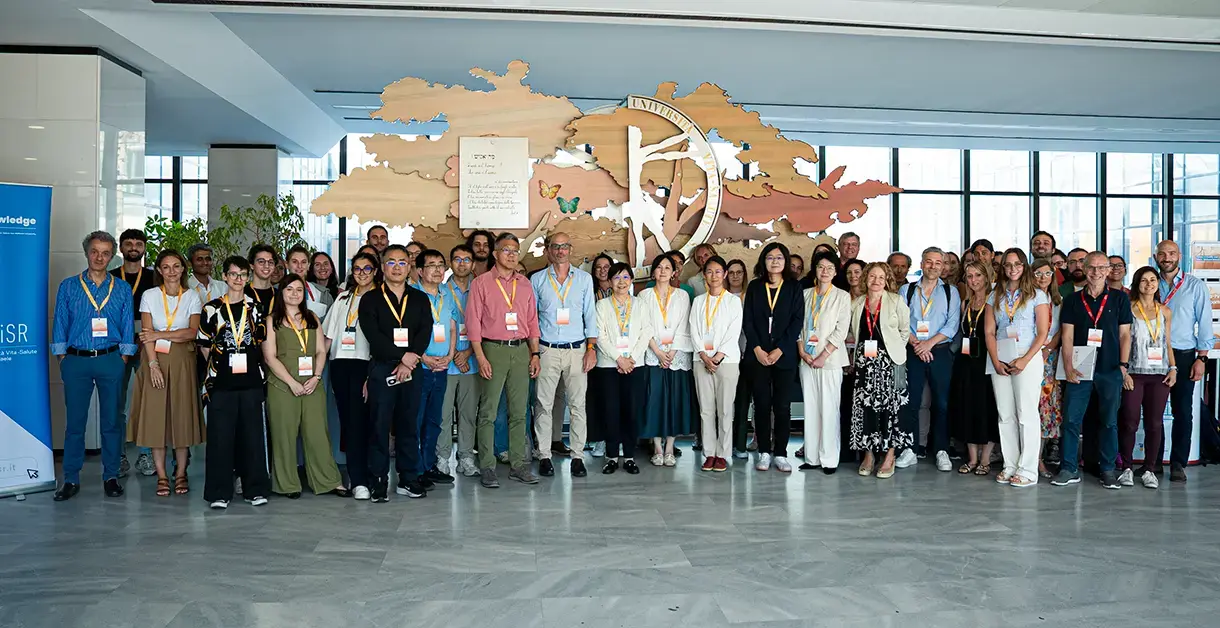
Immunology research is redrawing the very idea of the immune system: not a uniform army that tells friend from foe, but a set of responses that shift from tissue to tissue, and sometimes within the same organ. That was the throughline at Tissue Immunity and Neuro-Immune Interactions, the first bilateral symposium between Vita-Salute San Raffaele University and Tsinghua University in Beijing, organized by professor Matteo Iannacone, full professor of General Pathology at UniSR and director of the Institute of Immunology and Infectious Diseases at Ospedale San Raffaele (IRCCS), together with professor Hai Qi of Tsinghua University.
The symposium ranged across many of the open questions in contemporary immunology: how the tumor microenvironment neutralizes T cell attacks, how the immune and nervous systems communicate in neurodegenerative disease, and how memory cells recognize a pathogen encountered years earlier. A common picture emerged: different tissues, among them the liver, the gut, the pancreas, and the nervous system, shape immune responses in specific ways and determine their outcome, from the fight against cancer to defense against infection.
The Liver as a Model for Tissue Immunity
The outcome of an immune response depends on both the properties of immune cells and the tissue in which they operate. Every organ offers a distinct anatomical, vascular, and metabolic environment that shapes antigen recognition, communication between neighboring cells, and the execution of effector functions. Professor Matteo Iannacone used the liver, one of the models his group works on, to illustrate these principles: the organ constantly balances tolerance toward harmless antigens with an effective response to pathogens and tumors.
The group has uncovered the molecular and cellular circuits through which the liver controls the activation and maintenance of adaptive immunity, the “second” line of immune defense acquired specifically against pathogens the body encounters. The researchers found that CD8-positive T cells in the liver can become dysfunctional through a mechanism distinct from classic exhaustion. Building on these findings, the group identified several therapeutic strategies capable of restoring T cell function, based on IL-2, 4-1BB activation, and IL-27, described in three papers published in Nature, Cell, and Nature Immunology, respectively. The professor and his team are now working to translate these approaches into therapeutic applications.
The group is also studying how, in large tumor lesions, endothelial cells get reprogrammed to limit the immune surveillance carried out by T cells, and has already identified strategies capable of reversing this program. The research is ongoing, and results are expected in the coming months.
The Tumor Microenvironment: A Niche That Suppresses the Immune Response
One of the central themes of the symposium was the relationship between a tumor and its surrounding microenvironment, a key factor for the success of cancer immunotherapy, meaning the therapeutic strategies designed to boost the immune response against cancer. Several participating groups discussed the factors that prevent T cells from mounting an effective antitumor response: the characteristics of the tumor mass itself, the presence of regulatory T cells that shut down immune activity, and a hostile tumor microenvironment. This last factor was the focus of professor Renato Ostuni’s talk, in which he described how macrophages can, in some cases, support the survival and progression of pancreatic ductal adenocarcinoma, the most aggressive form of pancreatic cancer.
Using single-cell and spatial transcriptomics, Ostuni’s group identified a subpopulation of macrophages that, in pancreatic tumors, reactivates a molecular program similar to tissue regeneration after a wound. At the center of this process is prostaglandin E2, a molecule that suppresses T cell activity and thereby creates a tumor microenvironment hostile to the antitumor response. This may explain, at least in part, why immunotherapy fails in solid tumors such as pancreatic cancer.
Immunotherapy in Solid Tumors: New Targets for CAR-T Cells
On the second day of the symposium, Dr. Monica Casucci addressed the challenges of immunotherapy in solid tumors, presenting her group’s latest work on therapeutic targets for CAR-T adoptive cell therapies. These are currently approved for some blood cancers but still fail against solid tumors for three reasons: the hostile tumor microenvironment, the impenetrability of the tumor mass, which is physically inaccessible to engineered cells, and the lack of specific targets expressed exclusively by the tumor.
In a study published last year in Science Translational Medicine, Casucci’s team identified CDH17, a glycoprotein distributed across the entire surface of tumor cells but confined to lateral cell junctions in healthy cells, where it stays out of reach of CAR-T cells. This distribution makes CDH17 a particularly promising target for adoptive cell therapies against liver metastases from colorectal cancer. Building on these results, the group now plans to launch a phase 1/2 clinical trial testing a CAR-T therapy directed against CDH17, aiming to improve the efficacy of immunotherapy for solid tumors.
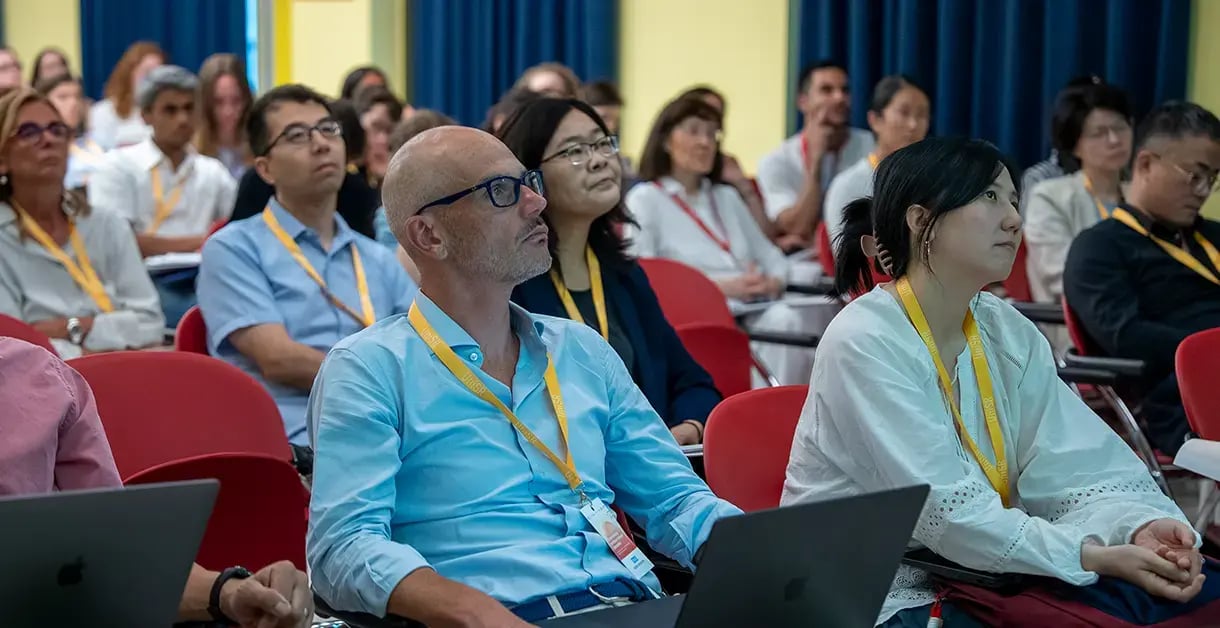
The audience at Tissue Immunity and Neuro-Immune Interactions, the first bilateral symposium between UniSR and Tsinghua University on tissue immunology and the dialogue between the immune and nervous systems.
Neuroimmunology: How the Immune and Nervous Systems Communicate
The immune system's reach across the body also comes through in its dialogue with other organs, including its involvement in neurodegenerative diseases such as amyotrophic lateral sclerosis (ALS). Dr. Dario Bonanomi showed that in ALS, the blood-nerve barrier protecting peripheral nerves becomes more permeable at an early stage of the disease. This allows circulating myeloid cells to access nervous tissue and trigger a neuroinflammatory response. Researchers extended these biopsy observations to animal models of ALS, where they observed marked neutrophil infiltration following disruption of the blood-nerve barrier. Removing these immune cells improved both the condition of the barrier and the pathology of the compromised motor nerves in ALS.
Work from prof. Li Wu’s group offers an example of how the brain and the immune system share key molecular players. The researchers found that the gene LRRK2, best known for its role in Parkinson’s disease, may also protect against pulmonary fibrosis. In mouse studies, the absence of this gene and the protein it produces was associated with greater immune cell infiltration in the lung and worse fibrosis.
The discussion on immune-nervous system interconnection was rounded out by presentations from professor Maria Rescigno on the dialogue between immunity, the gut microbiota, and the brain; Dr. Andrea Cugurra, a postdoc in professor Iannacone’s laboratory, on neuroimmune interactions in the liver; and Dr. Coco Chu on the same interactions in the gut. Professor Daniela Latorre rounded off this part of the program with her research on T cell autoreactivity in neurodegenerative disease.
Immune Memory: How Cells Remember Past Infections
Another thread running through the symposium concerned immune memory: how the body “remembers” an infection or a vaccination, and why that memory sometimes fails to protect against future variants of the same virus. Professor Hai Qi showed that only a minority of memory B cells, specifically those that established a more effective dialogue with T cells at the time of their formation, truly retain the ability to respond promptly to a second exposure. This mechanism can be enhanced pharmacologically, with promising results in animal models of influenza infection.
Professor Federica Sallusto addressed a different question: among the countless viral fragments the immune system could recognize, why only a handful of targets actually get identified. The answer, drawn from studies on vaccinated volunteers, has less to do with a limit in the T cell receptor repertoire than with how cells process and present the antigen, the molecule that signals the presence of a foreign agent such as a virus. This finding broadens the understanding of immune memory mechanisms and provides a new basis for pinpointing effective targets for vaccines and future cancer immunotherapies, while reducing the likelihood of false positives.
Spatial Biology: The Same Cell, Different Tissues
Dr. Marco De Giovanni closed the session by showing how modern spatial biology technologies reveal that the immune system is not organized uniformly within a single organ. In the gut, for instance, his group found that Peyer’s patches, the lymphoid structures distributed along the small intestine, show marked regionalization. Patches closer to the proximal end specialize in promoting cellular immune responses, while those toward the distal end mainly favor antibody production. This finding opens the door to the concept of regionalized medicine, an emerging approach aimed at developing therapies that selectively modulate specific areas of the same organ rather than indiscriminately targeting the entire tissue or a single cell type.
International Collaboration in Biomedical Research
The symposium brought together immunology, neuroscience, genomics, bioinformatics, and clinical medicine, disciplines that already work side by side in the laboratories of both UniSR and Tsinghua University. It is in this intersection that the collaboration between the two universities takes shape.
«Engaging with a university of Tsinghua’s caliber lets us move research beyond national borders and build a scientific dialogue that enriches both communities. Bringing together different areas of expertise, from tissue immunology to neuroimmunology, from genomics to bioinformatics, is essential to understanding the logic behind how the immune system operates across different organs, and to translating that knowledge into new therapeutic strategies. Symposiums like this one lay the groundwork for lasting collaborations, benefiting international biomedical research and, ultimately, patients», said professor Iannacone.
Written by

UniSR Communication Team
Thanks to the contribution of the various team members, the UniSR Marketing and Communications Service deals with the multiple communication areas of the University: news scouting, creation of news, audio and video, event organization, website management and institutional social media, drafting and publication of newsletters, support for institutional relations. The Service interacts with all the main stakeholders (students, teachers, technical and administrative staff, research community, territory) in order to support and potential communication (internal and external) of the initiatives related to teaching, research and public engagement.
Visit the author's page