29 Sep, 2026
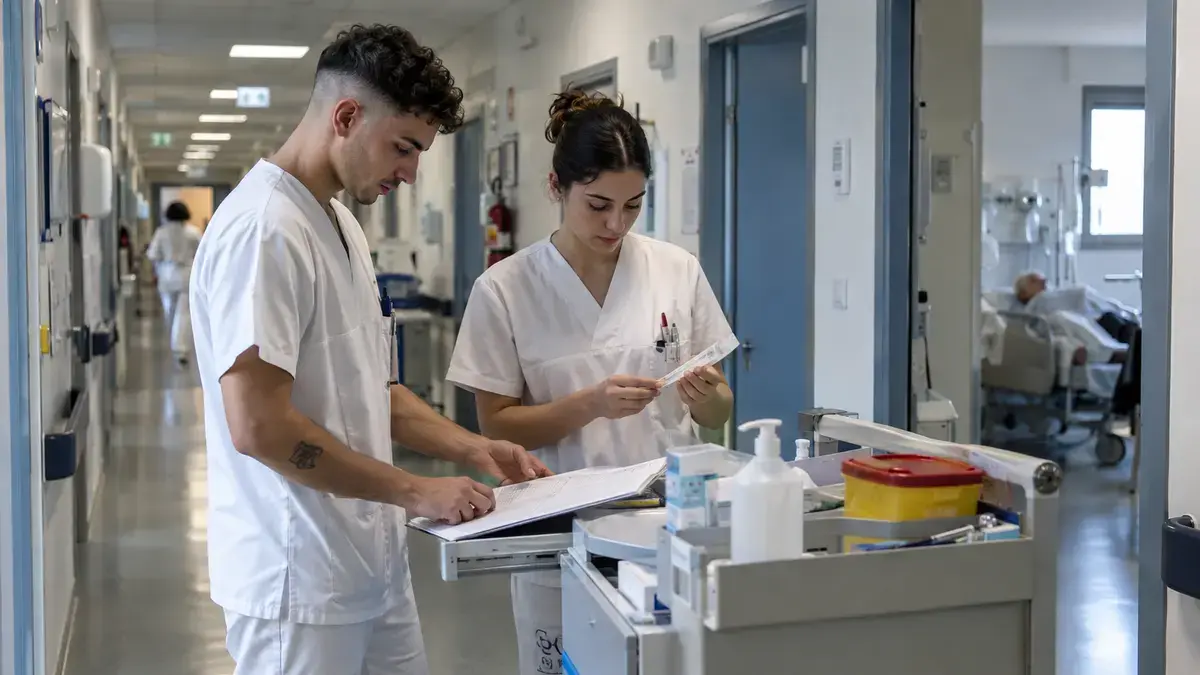
Why become a nurse in Italy today? We put the question to Giulia Villa, a researcher in Nursing Science at Vita-Salute San Raffaele University (UniSR), who has worked in the field for years and knows this career from different perspectives. Over the past few decades, nursing has changed profoundly. The shift of nurse education into universities and the development of nursing as a discipline have gradually broadened nurses’ areas of practice, from clinical care to research, and from education to the management and organisation of health services.
«Nursing is a wonderful job», Giulia Villa stresses. «It means being close to people every day and accompanying them step by step through their care, paying the utmost attention to their overall well-being as well as to their treatment. We are on the front line when it comes to making people feel better, listening to them and acknowledging what they are going through». We have explored this on the blog before, in The nursing profession: the art of “standing beside”. It is important to know, however, that the profession is facing a decline in its appeal worldwide, despite its enormous social importance. Here we try to understand why, and to rediscover the beauty of caring for others.
Nursing’s Recruitment Crisis is Global
«It’s a global problem that affects the whole world, including countries such as Canada and the United Kingdom, where nurses have always been held in high regard», Villa points out. Published in 2025, the first Report on the Nursing Professions by FNOPI, Italy’s National Federation of Nursing Professions, describes a shortage that has now become structural: Italy is short of at least 65,000 nurses. The reason is simple: the country has around 6.5–7.8 nurses per 1,000 inhabitants, against a European average of 8.4.
The problem, however, extends beyond national borders, as Villa observes. The global nursing workforce grew from 27.9 million in 2018 to 29.8 million in 2023 and is projected to reach 36 million by 2030, reducing the worldwide shortage from 5.8 to 4.1 million. The improvement is real but uneven: most of the gap will remain concentrated in Africa and the Eastern Mediterranean.
In Canada, nursing vacancies already exceeded 28,000 in the first quarter of 2023, up 24% on the previous year, with projections pointing to a shortfall of 117,600 nurses by 2030 if current trends continue. In England, the NHS reported 25,632 registered nursing vacancies in March 2025, a vacancy rate of 6%. «These are two countries where nurses enjoy a social standing that in Italy has yet to be built and recognised, and yet they struggle just as much to retain staff. The medical profession has similar problems too», Villa adds. «The health system has been under strain for twenty years, and dealing with some of its problems has weighed on more than one generation of professionals».
Strategies to Tackle a Shared Problem
Training more nurses is only part of the answer. International recommendations call for simultaneous action on training capacity, employment opportunities, working conditions, professional development and the ability of healthcare organisations to attract and retain nurses. «It’s also important to make the most of what each area of a nurse’s career has to offer, and to encourage collaboration between those in research, those in clinical practice and those working in education and management. The work environment can make all the difference, helping to retain talent and keep graduates in clinical practice», Villa comments.
1. Shift Work Offers More Flexibility
«There are real advantages to the way a clinical nurse’s work is organised, which people on the outside often fail to understand», Villa says of shift work. A few years ago, IRCCS San Raffaele Hospital decided to adopt 12-hour shifts. It is a decision that has changed the balance between work and private life. «Many colleagues stress how beneficial this choice has been, because although a 12-hour shift takes up the whole day, you only work 12 or 13 of them a month». This means more days off and a private life that is easier to manage. Nursing today is a predominantly female profession, Villa reminds us, and this adds to the weight of family commitments: the long shift may seem counter-intuitive at first, but it can turn out to be an advantage.
2. Why a Nursing Degree is Worth It
Earning a degree to become a nurse is a worthwhile investment of time and money. The international RN4CAST study showed that a higher proportion of nurses with a bachelor’s degree reduces hospital mortality: every 10% increase is associated with a 7% lower risk of death. Other research links a higher share of degree-educated nurses to fewer pressure ulcers and other adverse events.
One of the most tangible benefits of the reform of the profession also lies in the opportunities for specialist training. The Master’s degree in Nursing and Midwifery, Villa explains, «provides broad training in organisation, education and research. Graduates can work on hospital wards, in training new colleagues, in the organisation of health services or, as I did, in research, with greater awareness and skill». Few degrees offer this kind of versatility, and it has grown further in recent years. Alongside the general programme, three new specialist Master’s degrees have been created for nurses who want to stay in clinical practice, working in emergency and urgent care, maternal and child health, or community care. If a career in research appeals to you, we explain how to become a nurse researcher and describe the participatory research model piloted at UniSR.
3. During Training, Tutors Make the Difference
«Nursing is a collective effort that brings together different sides of the profession. Researchers make the discipline’s impact on people and professionals known to the scientific community, and then to the public. Educators give new generations the skills and tools to handle the job, including its difficulties. Those who run healthcare organisations work to make them more sustainable for everyone who is part of them every day».
How do you choose a university to train as a nurse? «One of the features that places UniSR among the best universities in Italy is its tutoring system for students. During clinical placements, each student is paired with a nurse from the ward who guides them through day-to-day practice. In addition, a university tutor, through regular discussion with colleagues on the ward, ensures that what is taught in the classroom is consistent with what students actually do on placement. This system means we can support students throughout their training and spot any difficulties early, and it also helps them make the transition into the profession. On top of that, there are the university-wide services open to all students, such as psychological counselling».
Acquiring the tools to face the challenges of the profession during their studies is the surest way for tomorrow’s nurses to do their job as well as they possibly can.
Written by

UniSR Communication Team
Thanks to the contribution of the various team members, the UniSR Marketing and Communications Service deals with the multiple communication areas of the University: news scouting, creation of news, audio and video, event organization, website management and institutional social media, drafting and publication of newsletters, support for institutional relations. The Service interacts with all the main stakeholders (students, teachers, technical and administrative staff, research community, territory) in order to support and potential communication (internal and external) of the initiatives related to teaching, research and public engagement.
Visit the author's page