20 Mar, 2026
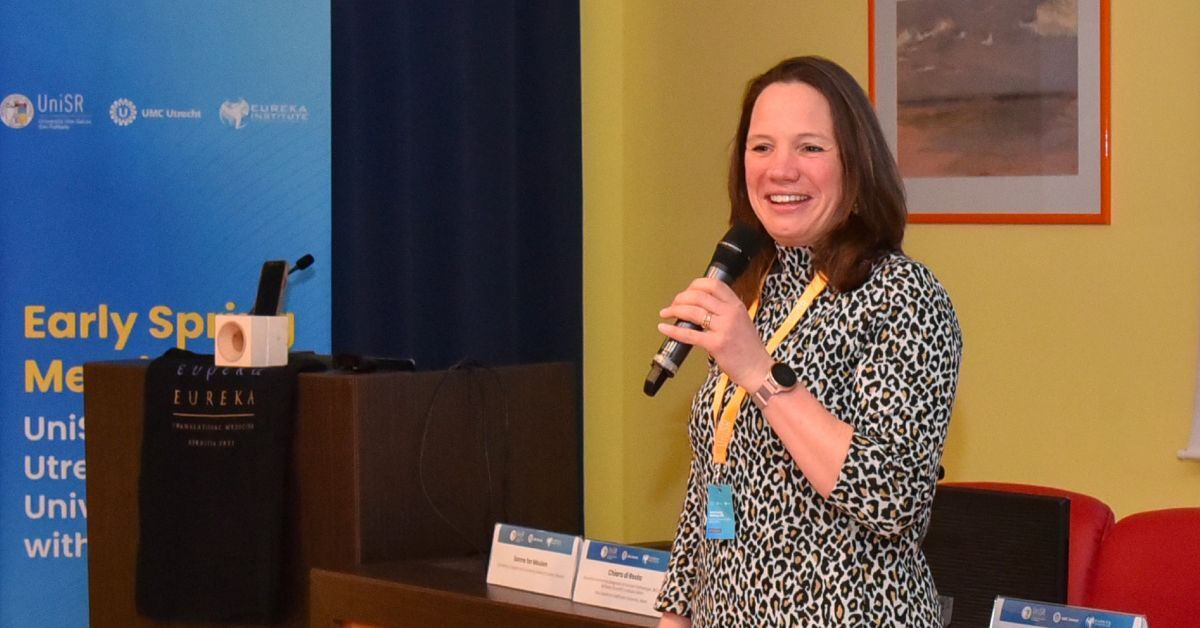
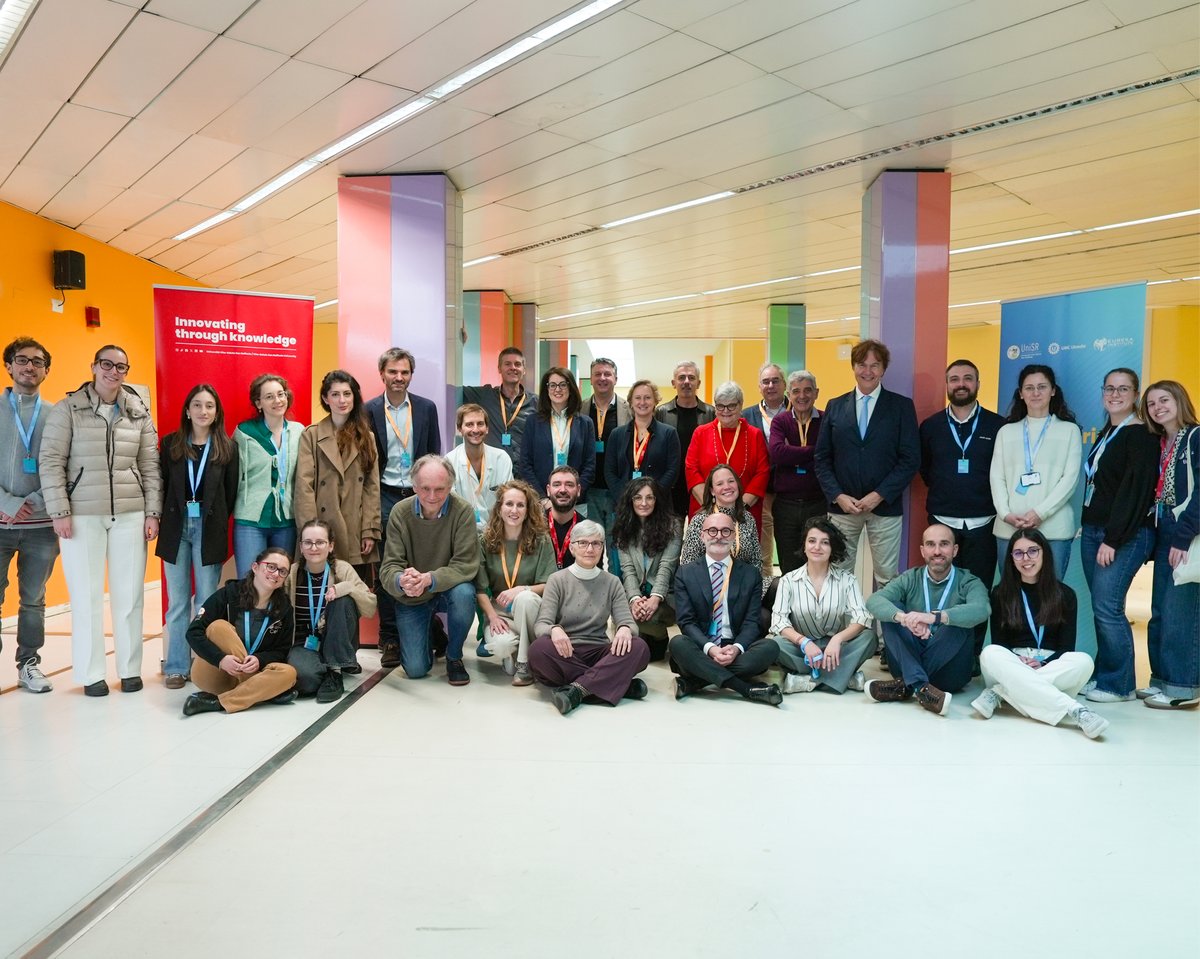
Translational medicine training and education were among the key themes discussed during “From Discovery to Impact”, the Early Spring Meeting hosted by UniSR on 5–6 March and jointly organized with UMC Utrecht under the aegis of the Eureka Institute for Translational Medicine. The event brought together researchers and educators to explore the challenges of translating scientific discoveries into clinical impact (LINK), while also addressing broader issues such as bioethics or misinformation and disinformation (LINK) science communication.
Education was one of the central topics: what skills should future translational scientists develop? And how can university programs effectively prepare students for the complexity of translational science?
In this regard, we’ve met with Sanne Ter Meulen-de Jong, Assistant Professor in Biomedical Education at UMC Utrecht and among the speakers of the event. She shared insights on how innovative training approaches can foster critical thinking, creativity, and interdisciplinary collaboration in translational medicine.
Background and role in biomedical education
There is rarely a single path leading from biomedical research to education. Many professionals arrive there gradually, as teaching becomes an integral part of their scientific work. This shift often reflects a broader interest in how knowledge is transmitted, not just produced. Looking at individual trajectories helps understand how educational models take shape in practice, especially in the context of translational medicine training.
Sanne, could you tell us a bit about yourself and your work?
I was originally trained as a biomedical researcher in the cardiovascular field, and I completed a PhD focused on cardiac fibrosis. During my PhD I also had a 20% teaching role, and that experience made me realize how much I enjoyed education. Over time that interest grew, and eventually education became my main professional focus.
Today I work as a teacher, and I am part of the innovation team of the Graduate School of Life Sciences. My work focuses on developing educational approaches in biomedical sciences, with particular attention to how we can integrate translational science into our programs.
Translational science as communication channel
The term “translational science” is widely used, but not always clearly understood. It does not simply describe a linear process from laboratory to clinic, but rather a continuous exchange between different stages of research. Its meaning has expanded over time, reflecting the need for closer integration across disciplines. Clarifying this concept is essential before discussing how it can be taught.
How would you define translational medicine and science?
Translational medicine (link quando sarà pubblicato) or translational science is often described as the bridge between the laboratory and clinical practice, but it works also the other way around as well- that is, the bedside that informs bench research.
In translational medicine, on one hand, clinician-scientists need to understand what happens at the level of fundamental research, while basic scientists should also be aware of the clinical context.
Both sides should learn from each other and remain open to the reciprocal perspective. This of course requires strong intrinsic motivation from researchers to bridge this gap.
How translational medicine training works in Utrecht
Designing programs in translational medicine training means going beyond traditional disciplinary boundaries. Universities are increasingly called to create environments where collaboration is embedded in the learning process. This involves aligning curricula with the realities of scientific and clinical practice. The way these programs are structured reveals much about how training is evolving.
How do you teach such cross-contaminating approach in Utrecht?
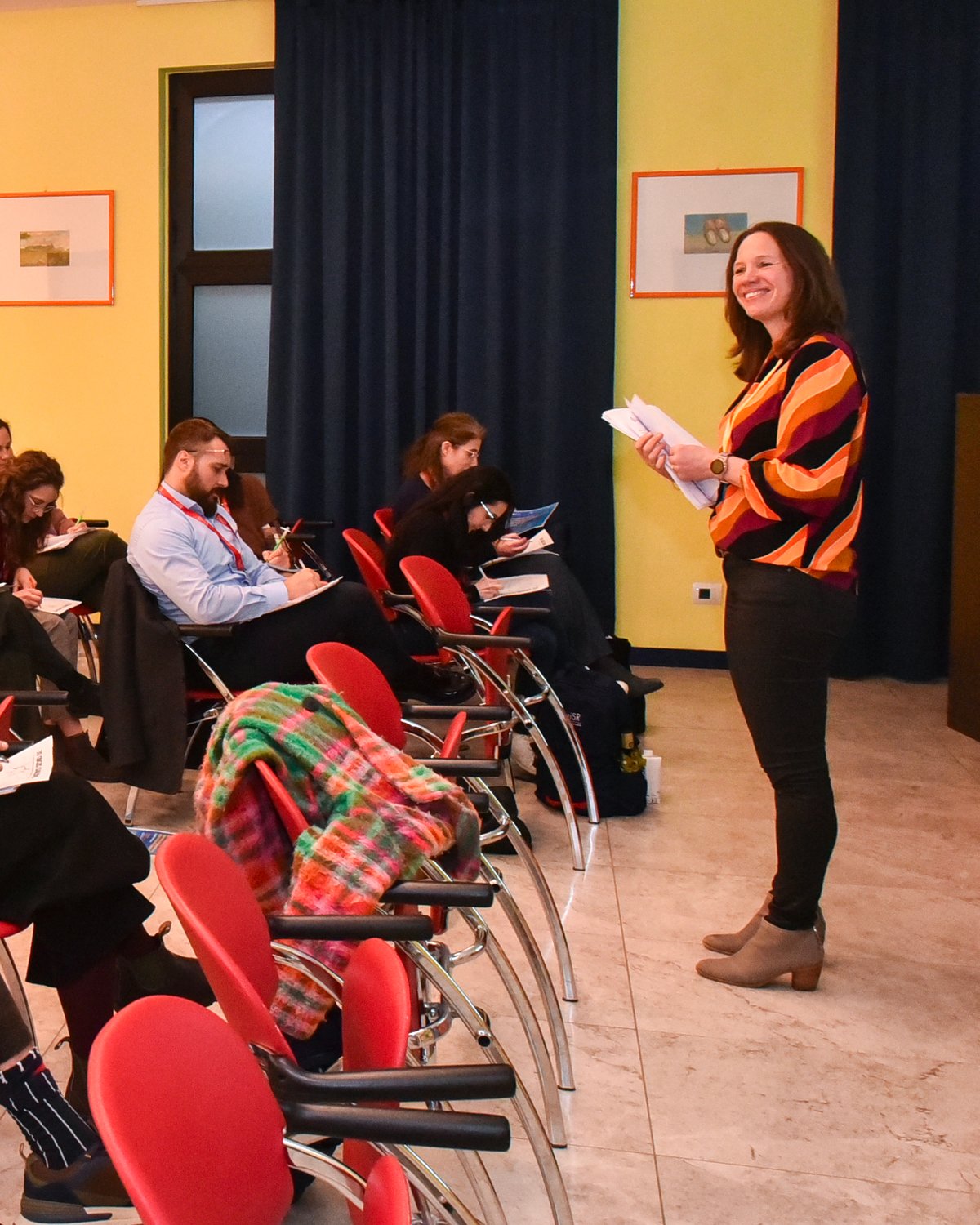
In both our medical and biomedical programs, we offer modules that focus specifically on collaboration between researchers and clinicians. In addition, I developed a program called Translational Life Sciences, in which we train students who are close to graduation or in the final stage of their studies with the skills needed in translational medicine.
Key skills in translational medicine training
When talking about translational medicine training, the question of skills quickly becomes central. In translational contexts, expertise is not limited to technical knowledge but extends to how individuals interact, reflect, and adapt. These competencies are often less visible but equally critical. Understanding them helps define what makes this field distinct.
Hence, what are the most important skills that the next generation of translational scientists should have?
The most important skill is the ability to effectively engage with multiple stakeholders. Other crucial skills that we are teaching in our program include collaboration and team science, reflection and personal development, and boundary crossing between disciplines.
Integrate different points of view
Among the different competencies mentioned, boundary crossing stands out as particularly relevant. It reflects the need to move between domains that often operate with different languages and assumptions. This process is not always intuitive and can generate friction as well as opportunity. Learning how to navigate these boundaries is a key part of training.
What do you mean by “boundary crossing”?
Boundary crossing refers to recognizing and working across the boundaries that exist between disciplines, perspectives, and ways of thinking. In our professional, and even personal, lives we constantly encounter boundaries. These might arise because we do not understand another discipline or because different groups have different perspectives on the same issue. In our program we teach students first to recognize these boundaries and then to use them as learning opportunities. The goal is to understand how to cross them and integrate different viewpoints.
Arts and humanities in biomedical education
At first glance, arts and humanities may seem distant from biomedical training. Yet, in recent years, they have increasingly been integrated into educational programs. This reflects a growing awareness that creativity and interpretation play a role in scientific work as well. Bringing these dimensions into the classroom challenges conventional expectations.
Do you think training biomedicine students in arts and humanities can help?
I am a strong supporter of integrating arts and humanities into medical and biomedical education. In the Translational Life Sciences program, we continuously challenge students with creative exercises. For example, in the first week they are asked to create a photographic installation using random objects they bring from home or find in their surroundings. Then, they’re asked to develop a story around the installation they’ve created.
For this activity we involve a professional photographer and an artist, who help the students reflect on the story they want to tell and how to develop their installation.
At first students are often surprised by the exercise and wonder what it has to do with scientific research. For this reason, we dedicate time afterward to a debriefing session, where we explain the value of the activity and encourage the students to reflect on how it felt to work outside their comfort zone.
Learning through interdisciplinary training
Not all learning happens in familiar settings. When students are placed in unexpected situations, they are pushed to reconsider how they approach problems and collaboration. These moments can be disorienting, but they are also where deeper learning often occurs. The value lies in the reflection that follows the experience.
What do students learn from this kind of unexpected experience?
Students find themselves in an unfamiliar setting, often working with people they do not know. This helps them reflect on how they behave in a new environment and how they approach challenges outside their usual academic context. We also ask them to think about what they can bring from this creative exercise into the main project they will work on for their final output of the course.
Training through real-world challenges
A defining feature of translational medicine training is its connection to real-world problems. These are not controlled exercises but open-ended situations where uncertainty is part of the process. Engaging with such challenges requires both analytical rigor and creative thinking. It also exposes students to the complexity of decision-making beyond theory.
What is Translational Life Sciences about?
Students work on real-world problems coming from society or from clinical practice, especially challenges for which no clear solution exists yet. Their goal is to develop innovative ideas to address these unmet needs.
For example, one group is exploring possible ways to overcome the blood–brain barrier to deliver drugs to the brain. These are challenging topics, but they stimulate students to think creatively and develop new perspectives.
Students themselves contact typical stakeholders, which include patients, clinicians, nurses, industry partners, startups, or other experts. They reach out to them to gather perspectives, ask for advice, or receive feedback on their proposed solutions to the main question. They also need to consider practical issues such as who might fund the solution they’ve developed or how it could be implemented.
From training to impact
Looking at outcomes helps to understand what these translational medicine training approaches actually produce. The results are not limited to final projects but include changes in how students think and work. In this sense, impact is both tangible and less visible. It emerges over time, through practice and reflection.
What is the outcome of the project?
After about four months, students present their ideas through a two-minute pitch, like the one that is used in entrepreneurial settings. They present it to four experts in a session inspired by the television format Dragon’s Den, where the experts provide feedback on the proposal.
However, the most important outcome is their personal portfolio, with which students reflect on what they have learned and how their skills have developed. Each student is also supported by an independent mentor who helps them reflect on their progress.
How to deliver an effective scientific pitch
Being able to communicate ideas clearly is an essential part of translational science. This becomes particularly evident when presenting to audiences with different backgrounds. Crafting a message requires selecting what matters and how to convey it effectively. It is a skill that develops through practice and feedback.
What are the most common mistakes students make when giving an elevator pitch?
One common mistake is focusing only on what they want to say rather than thinking about the perspective of the audience. People often provide too much information instead of considering what is necessary for the listener to understand the idea. In general, the ingredients for making a good pitch are enthusiasm, belief in your idea, and persuasiveness.
The power of inspiration for scientific research
Events like this often leave a trace that goes beyond the formal program. They create space for unexpected connections and new ways of thinking. Even brief exchanges can influence how researchers approach their work. This dimension of inspiration is difficult to measure, but clearly significant.
What will you take home from these two days here in Milan?
I really appreciated the combination of scientific research with broader topics that are relevant to everyone involved in research. Even though I was not an expert in all the scientific fields presented, I learned new ways of approaching problems. Among the rich program of talks and discussions, I found Professor Naldini’s one very inspiring. In general, I think that inspiration is one of the most valuable aspects of events like this, and I hope to bring that inspiration back to my students and colleagues.
These perspectives also reflect UniSR’s approach, where interdisciplinary collaboration is key for training future professionals in translational science.
Written by

UniSR Communication Team
Thanks to the contribution of the various team members, the UniSR Marketing and Communications Service deals with the multiple communication areas of the University: news scouting, creation of news, audio and video, event organization, website management and institutional social media, drafting and publication of newsletters, support for institutional relations. The Service interacts with all the main stakeholders (students, teachers, technical and administrative staff, research community, territory) in order to support and potential communication (internal and external) of the initiatives related to teaching, research and public engagement.
Visit the author's page