.jpg)
23 Mar, 2026
When discussing scientific research, especially in the medical and biomedical fields, one question is increasingly central to both the public and academic debate: how can we truly measure the real impact of research?
For decades, the answer seemed straightforward: the value of scientific work was mostly assessed through quantitative indicators such as the number of publications or the impact factor of journals.
In recent years, however, this traditional model has shown its limits. More researchers and institutions, especially in medical research and biotechnology, are calling to look beyond publication metrics and focus on the real contribution research makes to society, healthcare systems, and patients.
«For many years we evaluated research impact mainly through publications,” notes Berent Prakken, Emeritus Professor of Pediatric Immunology at University Medical Center Utrecht and Executive Director of the CHARM-EU alliance. “But publications mostly impact researchers’ careers. Society funds research because it expects a real impact on patients and the community.»
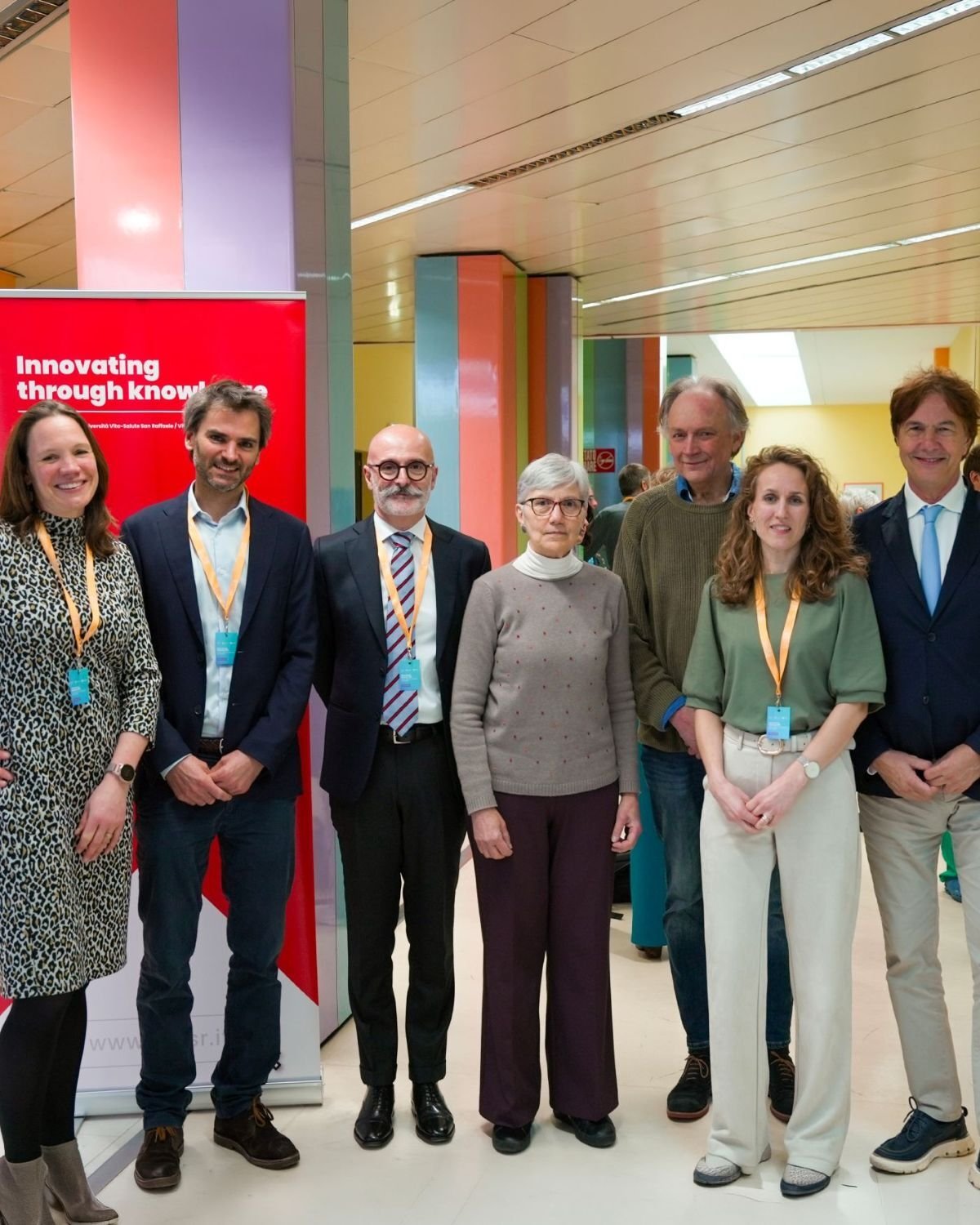
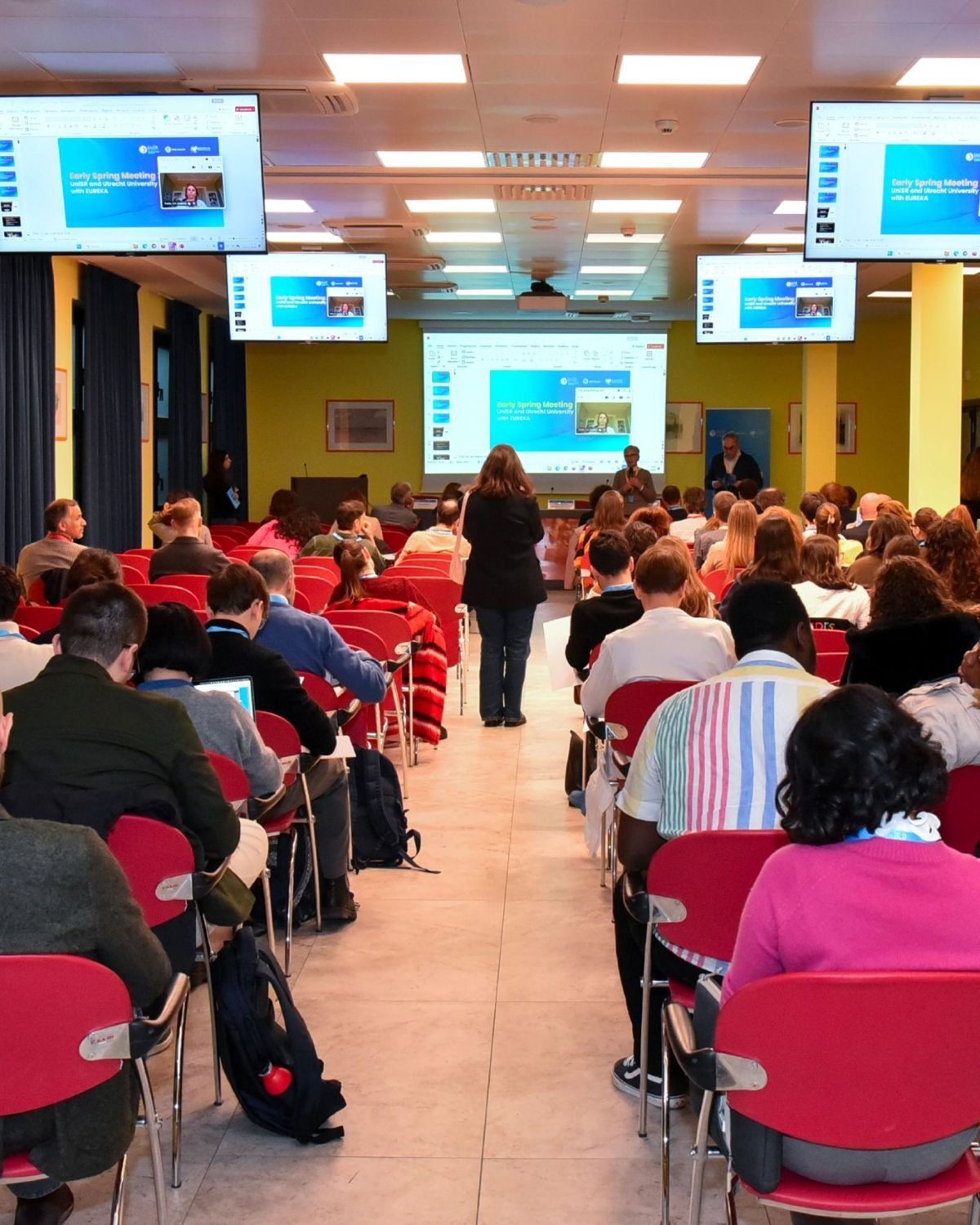
This central theme—the journey from scientific discovery to real impact on society and patient health—was the focus of the Early Spring Meeting 2026, a conference organized at Vita-Salute San Raffaele University in Milan, together with Utrecht University and the Eureka Institute for Translational Medicine.
Measuring the Real Impact of Research Beyond Academic Metrics
The debate on research impact goes far beyond evaluation policies. It raises a deeper question: the relationship between science and society. For years, success in science has been linked mainly to productivity. But more voices in the research community argue that real impact cannot be reduced to bibliometric scores.
As Gisela Slaats, Assistant Professor at UMC Utrecht’s Department of Nephrology, explains:
«For a long time, impact was measured by the journal’s impact factor. But that definition is outdated. Real impact is what research has on society and patients’ quality of life.»
This evolving perspective shows how the scientific community is rethinking its mission: if the ultimate goal of medical science is to improve human health, we must understand how discoveries evolve into tangible medical innovation.
Curiosity-Driven Research: Why Basic Science Matters
In conversations about medical research impact and translational medicine, the field that connects the lab to the patient, a common misunderstanding persists: that research follows a simple, linear path from lab to application.
In reality, many breakthroughs that revolutionized medicine originated in curiosity-driven research, driven by the desire to understand fundamental biological processes without immediate application in mind. «Basic research is still crucial,» says Prakken. «So-called blue-sky science, guided by curiosity, is fundamental. Translational medicine doesn’t mean abandoning basic science.»
Salvatore Albani, Professor of Medicine and Pediatrics at Duke-NUS Medical School in Singapore and leading figure in the Eureka Institute, reinforces this: «Much of the research that truly creates impact begins with curiosity and is inherently unpredictable.» Innovations such as gene editing and advanced cell therapies, discussed at the UniSR-Utrecht Early Spring Meeting, often emerge from long research journeys bridging basic discovery, preclinical studies, and clinical application. Translational medicine exists to navigate this complex “in-between” space.
Translational Medicine: Building Bridges Between Lab, Clinic, and Society
Translational medicine aims to close the gap between laboratory research and clinical practice, connecting scientists, physicians, and patients. Yet calling it a one-way flow “from bench to bedside” underestimates its scope.
«Translational medicine is a collaborative process,» explains Albani. «We must be bridge builders and to build a bridge, you first must understand where the river flows. It’s not a linear route from lab to bedside; it’s a carousel that revolves around the patient.»
To succeed, translational research requires more than technical skills. It demands creativity, teamwork, and interdisciplinary thinking.
Leopoldo Sitia, Postdoctoral Researcher at IRCCS Ospedale San Raffaele, summarizes it well:
«In translational medicine, you need multidisciplinarity and openness. The goal is always the same: connect basic, preclinical, and clinical research around the patient.» This approach also enhances another vital skill: scientific communication.
Scientific Communication as a Core Skill for Real Impact
For discoveries to have real-world impact, they must not remain confined to labs. They must be communicated, understood, and integrated into broader systems involving healthcare institutions, policymakers, industry, and citizens. As Gisela Slaats notes: «Researchers shouldn’t work in isolation. They must communicate not only with peers but also with patient representatives, companies, and the public.»
In this sense, communication becomes part of being a modern scientist.
«A scientist must be researcher, communicator, and manager at once,» adds Albani.
Reflecting this interdisciplinary mindset, the Early Spring Meeting included topics ranging from gene therapy and biomedical innovation to scientific misinformation, bioethics, and academic leadership—illustrating how medical research today requires skills beyond traditional science boundaries.
Early Spring Eureka: A Shared Space for Dialogue and Growth
The UniSR-Utrecht Early Spring Meeting 2026 was conceived to create a collaborative space for these multiple dimensions in education and research, within the global outreach of the Eureka Institute for Translational Medicine, an international network which fosters training, collaboration, and leadership in translational medicine.
«We aim to strengthen scientific and educational collaboration between universities,» says Andrea Salonia, Professor of Urology at Vita-Salute San Raffaele University, Dean of Studies of the International MD Program, and Director of the Urological Research Institute (URI).
According to Salonia, being part of the Eureka network offers a unique opportunity for the university as well for students and researchers, since it is one of the largest global ecosystems for translational medicine, connecting continents from Europe to the U.S. to Asia. The event also encouraged dialogue among researchers at different career stages: students, postdocs, and senior scientists, all sharing ideas, experiences and thoughts about scientific reasoning. «This meeting puts everyone on the same level,» says Sitia. «Sometimes a single conversation can change the way you see your work.»
Building Scientific Ecosystems for Real Impact on Patients’ Lives
The journey from a scientific discovery to a real benefit for patients is rarely linear. It requires time, teamwork, and the integration of diverse expertise.
Research often begins with curiosity, develops through international collaboration, and becomes transformative when it connects with wider systems of innovation, healthcare, and communication.
The real impact of research is therefore not the work of a single lab, but the outcome of scientific ecosystems that connect basic research, clinical medicine, technology, and society. Events like the UniSR-Utrecht Early Spring Meeting show how these ecosystems take form—through dialogue between researchers, institutions, and global scientific communities. Within these shared spaces of exchange, science becomes more than knowledge: it becomes real impact of research for patients’ lives.
Written by

UniSR Communication Team
Thanks to the contribution of the various team members, the UniSR Marketing and Communications Service deals with the multiple communication areas of the University: news scouting, creation of news, audio and video, event organization, website management and institutional social media, drafting and publication of newsletters, support for institutional relations. The Service interacts with all the main stakeholders (students, teachers, technical and administrative staff, research community, territory) in order to support and potential communication (internal and external) of the initiatives related to teaching, research and public engagement.
Visit the author's page