12 May, 2026
Loss of pulse is the most critical signal of cardiac arrest. According to the American Red Cross, survival odds fall by 10% for every minute CPR and defibrillation are delayed. Every year, millions of people worldwide die from cardiac arrest, and nearly half of all events occur without witnesses, often at home, beyond the reach of any immediate response. Closing the gap between the moment the pulse is lost and the arrival of emergency services could be the difference between life and death.
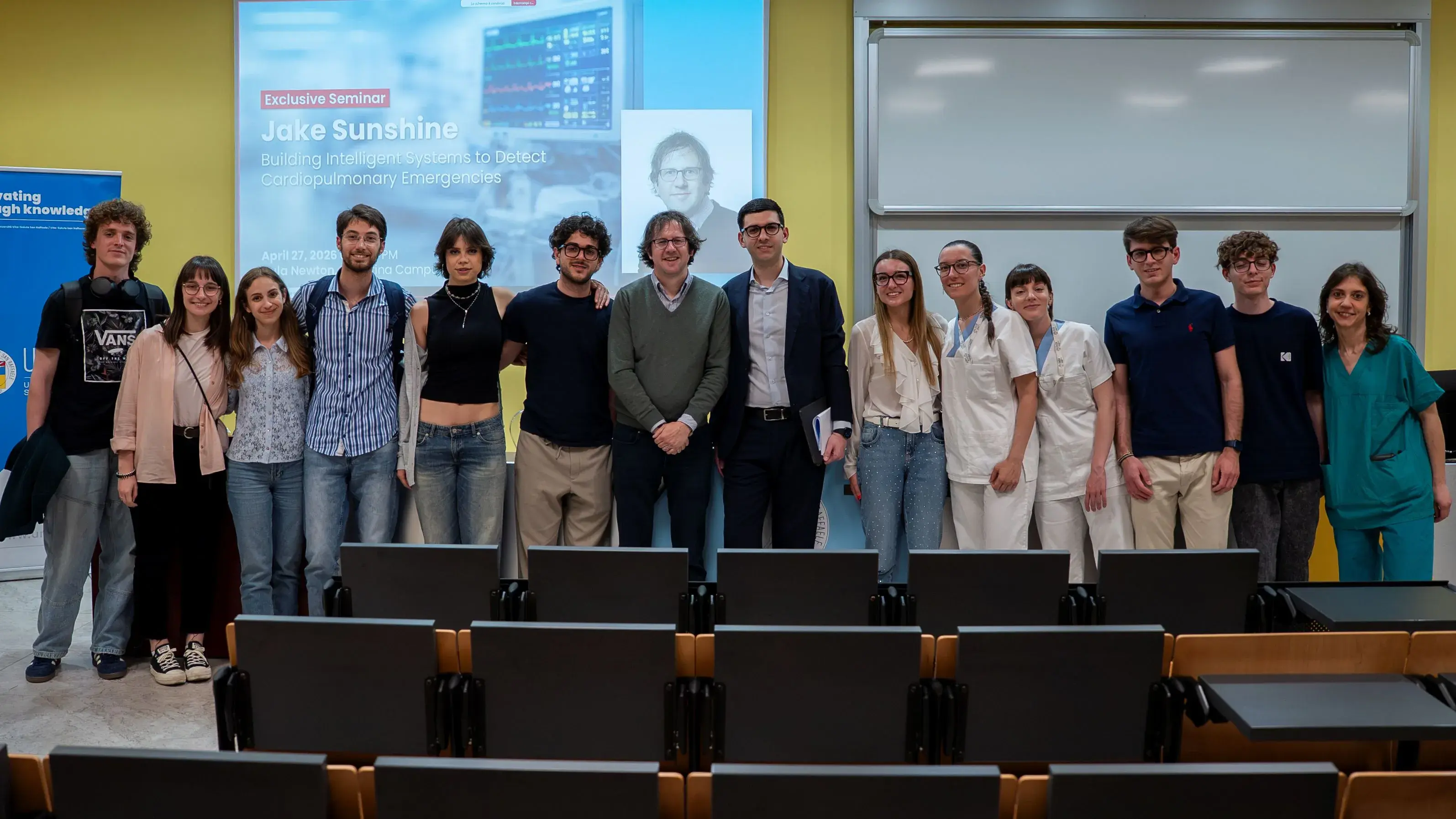
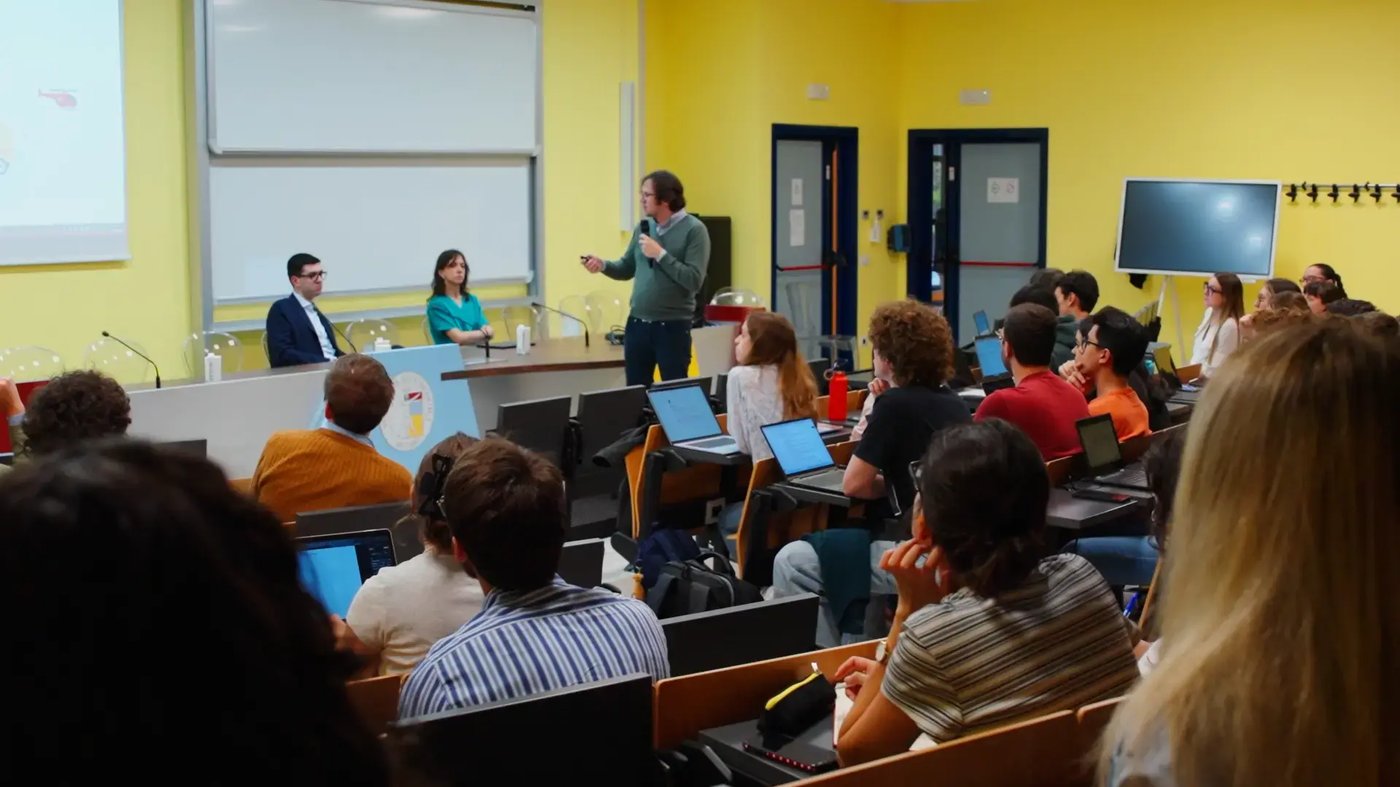
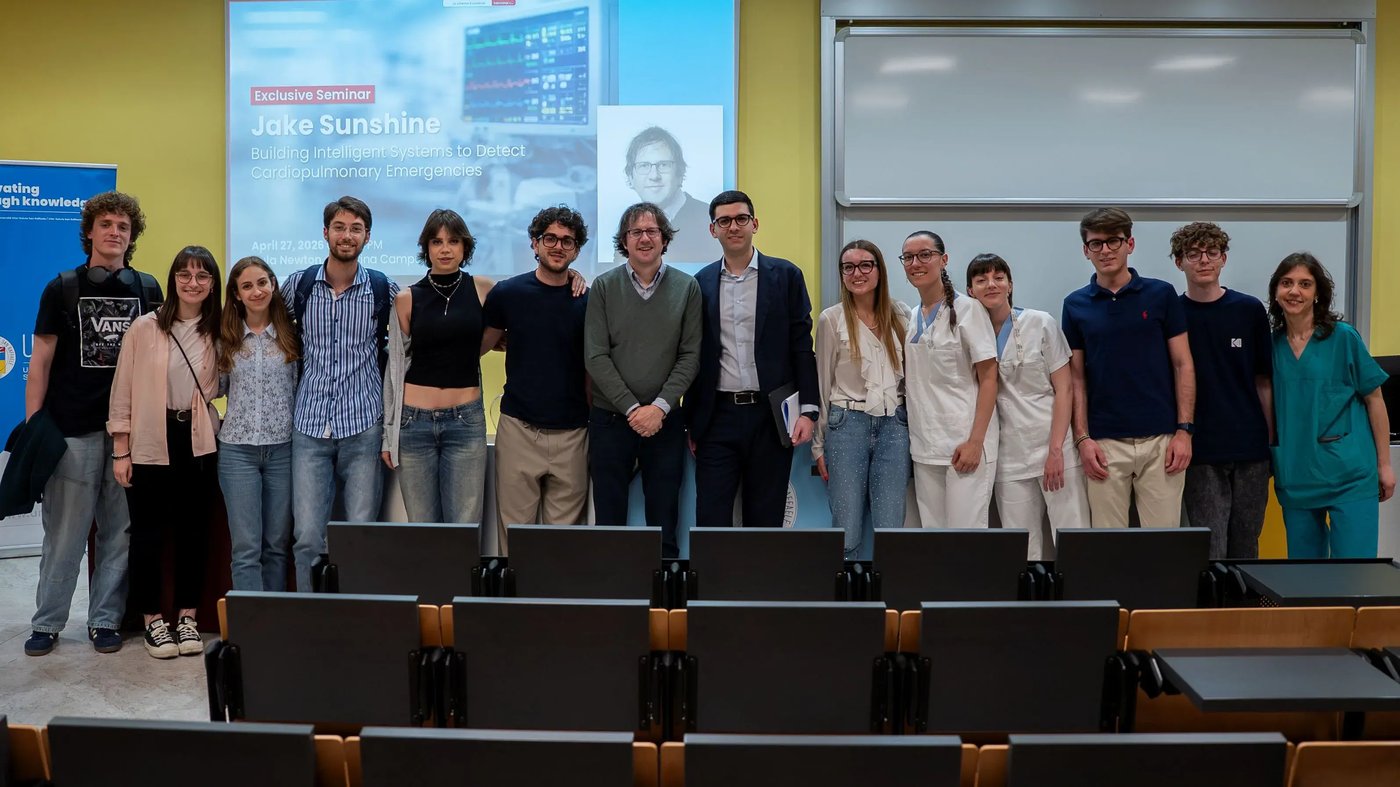
Jake Sunshine, associate professor at the University of Washington School of Medicine and scientist at Google, has built a significant part of his research around precisely this problem. His answer is a wearable: a smartwatch capable of detecting loss of pulse on its own and triggering an automatic emergency call. Sunshine discussed this technology at a seminar at UniSR, invited by Prof. Alberto Zangrillo, full professor of Anaesthesia and Intensive Care and Chief Clinical Officer at San Raffaele Hospital, who is PI of a EU funded project on prediction of major cardiovascular events (cardiac arrest and myocardial infarction) from smartwatch data.
The Smartwatch That Detects Loss of Pulse
Wearable devices already monitor heart rate, physical activity, and sleep quality. The transition from passive monitoring tools to active emergency-response systems is the frontier where Sunshine works. A device that measures the pulse continuously can detect its absence and act accordingly. As he explains, the focus is specific: «Our focus is unwitnessed events, detecting the loss of pulse that accompanies this event when there is no one around who can call for help». Sunshine is clear that the technology operates only with the individual's consent and if they opt in to use it.
The Algorithm Challenge: Detecting Loss of Pulse Without False Alarms
Translating this concept into a reliable system means overcoming several obstacles. The first is technical: the signal collected at the wrist can be weaker than readings taken from other parts of the body. Movement, posture, and individual variation introduce noise and variability that can complicate the accurate measurement.
The second obstacle is methodological. «For ethical and logistical reasons, there is no direct way to collect large amounts of data on real cardiac arrests in controlled conditions to train the technology», Sunshine explains. «For this reason, we combined existing clinical data from the literature with laboratory simulations and collaborations with specialized cardiologists». This combined approach allowed the system to learn to recognize loss of pulse.
The False Positive Problem
The core technical challenge concerns false positives. «The system we designed is connected to emergency services, which are a public resource. Therefore we have to take great care to avoid overloading systems with non-emergency calls», Sunshine notes.
For this reason, the algorithm runs in multiple stages. Before alerting emergency services, it analyses the signal, checks for any residual trace of a pulse, integrates data from multiple sensors, and interacts with the user by producing an insistent, noticeable vibration. «Only if the person does not respond to the signal — for example, by moving their arm or touching the display — does the smartwatch attempt to call for help», he explains.
Real-World Data After Launch: What the Results Show
Following validation and the publication of initial results in Nature, the technology was introduced to the European market and subsequently to the United States. Post-launch data confirmed the robustness of the approach developed by Sunshine and his colleagues. «The false positive rate turned out to be better than observed in our pre-launch research», he reports, «and we have not received negative feedback from emergency services related to excess improper calls».
Towards a New Wearable Infrastructure
In Sunshine's view, the technology behind these «intelligent» wearables will eventually become standard across a wide range of devices, not just smartwatches. «Our goal is to bring this capability to every wearable device, the way smoke detectors and car airbags are now standard features that started as optional extras and became essential safety infrastructure», he says.
The stakes are considerable. Looking ahead, Sunshine aims to make these capabilities more widespread. For those training today, this landscape provides many opportunities, where the ability to read data, understand clinical contexts, and design reliable systems can complement and integrate the work of the next generation of medical professionals.
Research Across Academia and Industry
Sunshine's research trajectory also offers a valuable perspective on how scientific work changes when it crosses the boundary between university and industry. His experience points to continuity between the two worlds rather than separation. «I've had the good fortune to do research both in academia and in a corporate research and development organisations, and in my view the two experiences resemble each other more than people think», he reflects. «Google has a deep and committed research culture, it was founded by two students in the course of their PhD».
This background also helps explain the nature of the smartwatch project itself. On one side: methodological rigour, clinical validation, peer-reviewed publication. On the other: the capacity to scale, to integrate the technology into wearable devices, and to make real-world infrastructures (such as emergency services) to work together. Students and early-career researchers who want to develop and commercialise technologies of this kind can benefit from building cross-cutting competencies and pursuing multi-disciplinary collaborations.
Sunshine's advice to young researchers with similar ambitions is direct: «Develop a niche, an area of expertise you are genuinely passionate about and that has a real impact on people's lives. Then build the skills to do high-quality research, the kind that holds up under peer review and, at the same time, has the capability to help a lot of people».
Written by

UniSR Communication Team
Thanks to the contribution of the various team members, the UniSR Marketing and Communications Service deals with the multiple communication areas of the University: news scouting, creation of news, audio and video, event organization, website management and institutional social media, drafting and publication of newsletters, support for institutional relations. The Service interacts with all the main stakeholders (students, teachers, technical and administrative staff, research community, territory) in order to support and potential communication (internal and external) of the initiatives related to teaching, research and public engagement.
Visit the author's page