3 Apr, 2026
Neuroethics is a field of study that examines the ethical, legal and social implications of neuroscience and neurotechnologies — the technologies that allow us to study and, in some cases, modify the human brain.
On one hand, it analyses the moral questions arising from the study of and intervention on the brain (as in the case of neuroimaging techniques or pharmacological interventions). On the other, it investigates the neural underpinnings of moral behaviour itself.
Philosophy has begun to ask a growing number of questions that call upon neuroscience, medicine and psychology. What happens in the brain when we perform mathematical calculation? And when we revisit a past episode, charged with emotion and meaning? Or, more broadly: are our choices truly free, or are they determined by chemical and biological processes? To what extent do these explanations affect our understanding of responsibility and autonomy?
Through an increasingly close dialogue with neuroscience, philosophical reflection opens up to a productive interdisciplinary exchange while remaining true to its vocation: integrating different fields of knowledge to build shared, critical reasoning. This dialogue does not imply reducing ethics to science (or vice versa), but rather a confrontation between different levels of explanation and justification.
Neuroethics: a young and promising discipline
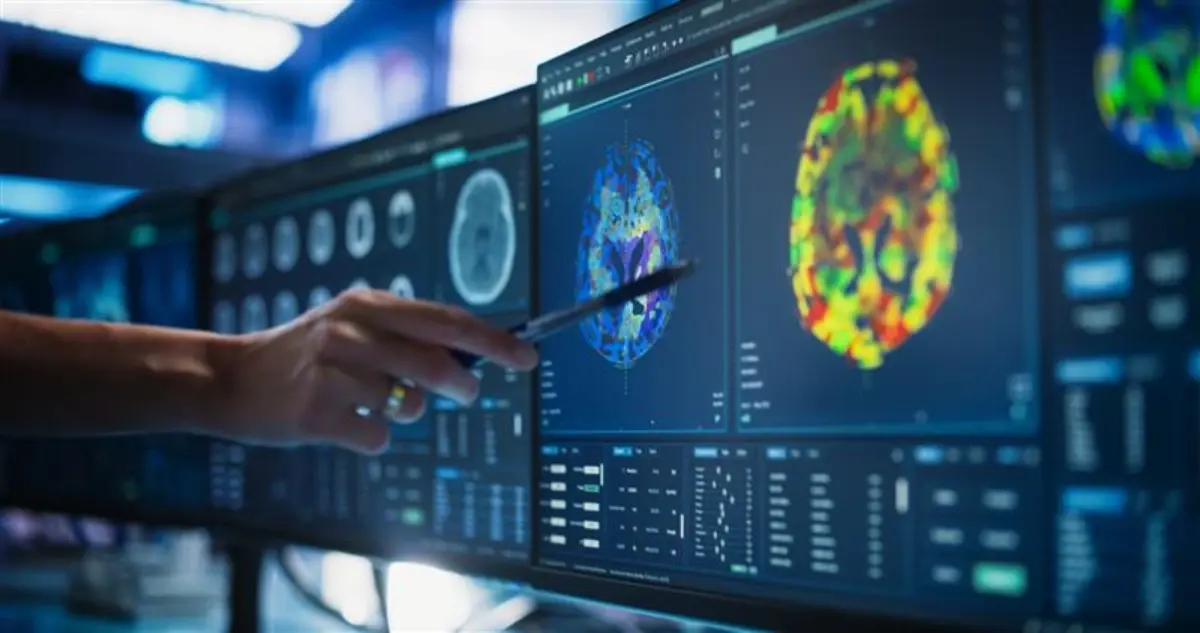
The advent of neuroimaging techniques, such as functional magnetic resonance imaging and positron emission tomography, has made it possible to observe brain activity during cognitive, emotional and decision-making tasks. This allows researchers to link neural dynamics with mental functions and to explore the biological bases of human behaviour.
Engaging with neuroscientific data raises some crucial questions: within what limits can philosophy dictate moral norms? And to what extent can neuroscience explain cognitive and decision-making processes? In other words, how can philosophy and neuroscience engage in an effective dialogue?
It is first and foremost a question of method: philosophy must engage with empirical data, reformulating its questions without closing in on itself. At the same time, it would not be appropriate to entrust neuroscience with the task of entirely resolving fundamental questions such as freedom, autonomy and human behaviour. Empirical data can inform ethical reflection, but they cannot replace it or directly determine its conclusions. Similarly, philosophical reflection can contribute to the interpretation of empirical data, to study design and to understanding their theoretical implications — without this allowing it to dispense with empirical research.
This kind of interaction is particularly relevant for those branches of philosophy that directly engage with human capacities for judgment, decision and behaviour, or with meta-ethical and moral questions related to action. It does not imply that all of philosophy must adopt an empirical orientation: the construction of normative theories and autonomous ethical systems retains its full legitimacy, while performing a different and complementary role to the dialogue with science.
One of the founding articles of neuroethics, Neuroethics for the New Millennium by Adina Roskies, distinguishes two main areas of inquiry: the neuroscience of ethics and the ethics of neuroscience.
Ethics of neuroscience: treatment, enhancement and responsibility
Similar in method to bioethics, the ethics of neuroscience examines how neuroscientific practices can be designed, conducted and evaluated in light of philosophical and moral reflection.
Treating or enhancing?
Among the most debated topics is the use of drugs (or other technologies) for non-therapeutic purposes, aimed instead at cognitive or moral enhancement. Drugs such as Ritalin or Adderall, developed to treat — among other conditions — attention deficit hyperactivity disorder, are sometimes used by healthy individuals to improve concentration, memory or academic performance. Beyond the effectiveness of such use for improving performance — questioned by the literature for those who already have average abilities — the ethical and social questions it raises are clear.
Who should bear the costs of such interventions, if they were socially accepted? The public healthcare system, with implications for resource allocation, or the individual, increasing the risk of inequalities? And where should we draw the line between treatment and enhancement: when is a condition pathological, requiring therapeutic intervention, and when does it fall within normal human variability? This distinction, often intuitive, is in many cases blurred and context-dependent.
A promising therapeutic frontier: neuromodulation
One of the most current and actively discussed topics within the ethics of neuroscience is neuromodulation: the set of techniques capable of directly modulating nervous system activity through electrical, magnetic or chemical stimulation, influencing specific brain functions.
These techniques are primarily employed when traditional drugs have limited efficacy in patients suffering, for example, from treatment-resistant depression, chronic pain or specific movement disorders.
Among the most well-known examples of neuromodulation are deep brain stimulation for Parkinson’s disease and transcranial magnetic stimulation in psychiatry.
In recent years, these technologies have also been tested beyond the strictly therapeutic context, opening the possibility of modulating cognitive and emotional functions in healthy subjects. This phenomenon redefines the boundary between treatment and transformation of the individual and places neuromodulation at the centre of the debate between neuroscience, ethics and psychology.
Philosophy, neuroscience and psychology at Wired Health 2026
On 18 March 2026, neuromodulation was the subject of a debate at Wired Health 2026, with the participation of Prof. Sarah Songhorian, Associate Professor of Moral Philosophy at UniSR and Vice-President of the Italian Society for Neuroethics and Philosophy of Neuroscience (SINe), and Dr Davide Folloni, a UniSR neuroscientist developing innovative brain therapies based on ultrasound.
"Faced with increasingly promising technologies such as neuromodulation, one might think the risk is that of moving too fast — Songhorian explains — however, the point can be reframed: rather than speed, it makes more sense to talk about accompaniment".
"Ethics should not hold back research by adopting a sceptical stance, because blocking the development of technologies that could alleviate patient suffering would not be the right thing to do and would prove counterproductive. At the same time, philosophical reflection cannot arrive after the fact: if it intervenes only retrospectively, the risk is finding ourselves confronted with practices already widespread and recognising their uses and abuses without being able to guide their development any longer. It is essential that empirical research and philosophical reflection proceed together".
In this sense, philosophy is called upon to follow scientific progress from the very beginning — not as an obstacle, but as a critical and aware interlocutor — and to accompany the scientific developments emerging from psychological and medical research.
Neuroscience of ethics: the moral brain and the limits of freedom
The second face of neuroethics consists of the neuroscience of ethics, which investigates the impact that neuroscientific research can — and should — have on our moral, social and legal conceptions. For example, neuroscience helps clarify the mental processes that guide moral judgment and choices, without, however, exhausting the normative questions about what is good or just.
The neuroscience of morality
How do we think about right and wrong? It is a classic question in moral philosophy, but today cognitive science and neuroscience are beginning to show us which mental and brain processes are involved in these decisions: the so-called "moral brain", which, as Prof. Songhorian explains, "allows us to weigh choices and make decisions in morally relevant contexts".
Among the most influential scholars is Joshua Greene, author of the article Beyond Point-and-Shoot Morality: Why Cognitive Neuroscience Matters for Ethics. His aim is to show how neuroscience can contribute to ethical reflection without claiming to replace it.
According to Greene, our brain works somewhat like a camera with two modes: 1) an automatic mode, fast, intuitive, often guided by emotions; and 2) a controlled mode, slower, reflective, linked to conscious reasoning.
Applied to morality, this theory suggests that there are two broad types of judgments: 1) characteristically deontological ones — for example, the refusal to directly harm a person even to achieve a greater benefit — are often sustained by automatic emotional responses; 2) characteristically consequentialist ones — which require weighing costs and benefits — involve reasoning and cognitive control processes to a greater extent.
Neuroimaging studies show that these two types of judgment activate partly different brain systems: more emotional responses engage areas such as the ventromedial prefrontal cortex and the amygdala, while more reflective judgments activate regions such as the dorsolateral prefrontal cortex.
To explain this dynamic, Greene proposes an effective metaphor: that of "point-and-shoot" morality. Part of our moral responses is rapid, intuitive, automatic and often difficult to articulate. But alongside this there exists a more "manual" mode, which allows us to reflect, reconsider and sometimes correct our intuitions.
It is important, however, not to draw conclusions too hastily. Understanding how we form moral judgments does not yet tell us whether they are right or wrong. The descriptive level (how the brain works) and the normative level (what we ought to do) remain distinct, even though they can inform one another.
Beyond the dual model: emotion and reason in moral judgment
"Traditionally, the moral brain has been interpreted through a dual model, in which the rational and the intuitive-emotional dimensions are understood as necessarily opposed — Songhorian observes — however, in recent years a debate has emerged that places the interaction between these two systems at the centre".
This approach brings together empirical evidence and normative reflection, showing how emotions are not an obstacle to reason but a structural component of moral judgment. In other words, morality is neither purely rational nor purely emotional: it is the result of a dynamic balance between intuition and reflection. It also brings back to the foreground classic philosophical questions: how do emotions influence moral reasoning? How free are we, really, in our choices?
A balance still under construction
The distinction between the neuroscience of ethics and the ethics of neuroscience is useful on a theoretical level, but in practice the two domains are constantly intertwined. Understanding decision-making processes affects how we evaluate interventions on the brain; at the same time, technological possibilities raise philosophical questions about freedom, identity and responsibility.
Thus, philosophy participates actively, in dialogue with science and psychology, in understanding and rethinking what it means to be human, in its entirety: body, mind and soul.
Written by

UniSR Communication Team
Thanks to the contribution of the various team members, the UniSR Marketing and Communications Service deals with the multiple communication areas of the University: news scouting, creation of news, audio and video, event organization, website management and institutional social media, drafting and publication of newsletters, support for institutional relations. The Service interacts with all the main stakeholders (students, teachers, technical and administrative staff, research community, territory) in order to support and potential communication (internal and external) of the initiatives related to teaching, research and public engagement.
Visit the author's page