
23 Jun, 2026
A century of oncology has established one principle above all others: accurate diagnosis determines treatment. Hematologic cancer classification is the infrastructure that makes accurate diagnosis possible. Today, under the same tumour type, pathologists can recognise more than 120 distinct entities, each with its own biological profile, prognosis, and therapeutic implications.
The challenge is that two competing systems currently classify blood and lymph node cancers. The fifth edition of the World Health Organization classification (WHO-HAEM5) was published in 2022. In the same year, a separate group of international experts published the International Consensus Classification (ICC). Two distinct frameworks describing the same biological reality, a divergence that, in some cases, can lead to different diagnoses for the same patient, depending on which system the haematolymphoid pathologist uses.
In March 2026, the international community of hematologic cancer specialists convened in Chicago for the Classification Advancement Meeting. Among those involved in the consensus process were professors Maurilio Ponzoni, Andrés J. M. Ferreri, and Paolo P. Ghia of Vita-Salute San Raffaele University and IRCCS San Raffaele Hospital. The meeting laid the groundwork for resolving the divergence between the two systems and building a single shared classification under WHO authority.
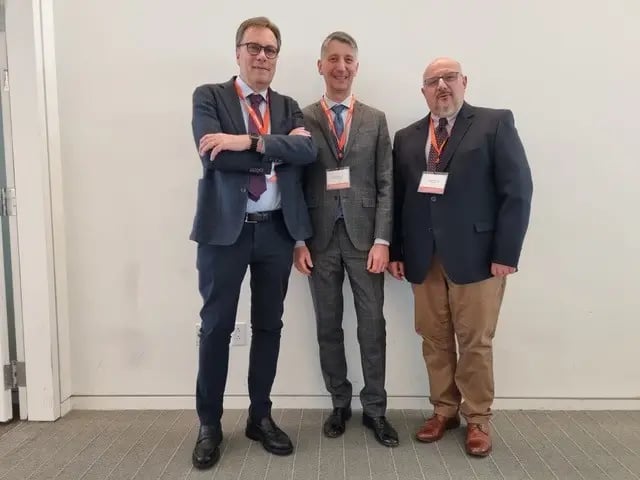
From left to right, profs: Maurilio Ponzoni, Paolo Ghia and Andrés J. M. Ferreri
Two Systems, One Patient: the Case for Unification
The divergence between WHO-HAEM5 and ICC has concrete consequences for clinical practice, research, and the lives of patients awaiting diagnosis. As outlined in an editorial published in Blood, co-signed by Prof. Ponzoni in his current role as President of the European Association for Haematopathology (EA4HP), a single universally adopted classification system is necessary to guarantee:
- precision in patient care
- rigour in clinical trial enrolment
- progress in therapy development
When laboratories in the same country, or across different countries, apply divergent classification criteria, clinical trial results become difficult to compare, and the scientific basis for targeted treatments is weakened.
Myeloid tumours illustrate the problem clearly. Their classification is already complex, given that their molecular characteristics are heterogeneous and can vary from patient to patient. Acute myeloid leukaemia is a case in point: the diagnostic thresholds, such as the blast cell percentage in bone marrow and the associated genetic abnormalities, have been revised multiple times. The divergence between WHO-HAEM5 and ICC adds to this existing complexity rather than resolving it.
How Hematologic Cancers Are Classified: the Clinicopathological Entity
Naming a tumour requires hundreds of experts and years of work. Lymphoma, a cancer arising from the uncontrolled proliferation of lymphocytes, encompasses more than a hundred distinct entities. Each one must satisfy the criteria of a clinicopathological entity. It is recognised as a distinct type only when it can be reliably distinguished from all others based on a defined combination of criteria.
The criteria are layered. First, morphological criteria, the appearance of cells under the microscope. Then immunophenotypic markers: surface proteins that identify cell type; followed by cytogenetic and molecular alterations, meaning the chromosomal and genetic abnormalities found in each entity. In some cases, clinical criteria are also applied: the site of origin, the pattern of presentation, the biological behaviour of the tumour.
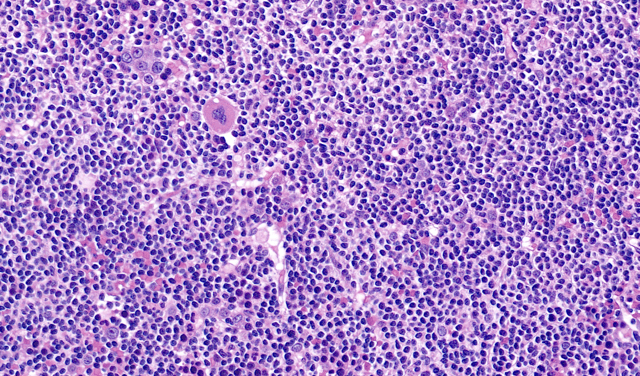
Diffuse Large B-Cell Lymphoma: One Name, Two Diseases
Diffuse large B-cell lymphoma is the most common hematologic cancer. It is characterised by a diffuse infiltration of large malignant B-lymphocytes. When it arises in the lymph nodes, its biological profile and response to treatment are well defined. When the same morphology appears in the central nervous system, however, it constitutes a completely different entity, with distinct prognosis and distinct treatment protocols.
The reason lies in physiology. The brain is protected by the blood-brain barrier, which shields cerebral tissue from drugs, toxins, and other circulating substances. The chemotherapy agents and monoclonal antibodies used to treat nodal diffuse large B-cell lymphoma (anthracyclines, alkylating agents, rituximab, vincristine) cannot cross this barrier for biochemical and structural reasons. Central nervous system involvement therefore requires agents known for their ability to penetrate brain tissue: methotrexate, cytarabine, thiotepa, nitrosoureas.
«Under the microscope, the tumour morphology is always the same, regardless of where in the body it is found. But the form arising in the central nervous system has completely different biological characteristics and treatment responses compared to the nodal form. In this case, the clinical criterion — knowing where the tumour is located — refines the morphological diagnosis obtained under the microscope», Ponzoni explains.
Building scientific consensus on classification on this basis requires months of preparatory work and meetings across the world.
Precision Medicine and Classification: Two Logics that Reinforce Each Other
Precision medicine, tailored to the individual patient's characteristics, might seem at odds with large-scale classification systems built by consensus and applied to broad populations. The apparent contradiction dissolves on closer examination.
«Innovative therapies only have value if we are talking about the same type of disease» Ponzoni, Ferreri, and Ghia note. Every newly classified entity, every lymphoma subtype distinguished with rigorous criteria, is in fact the prerequisite for applying targeted therapy with increasing precision. Without an accurate classification, a clinical trial for a new drug might enrol patients with biologically distinct disease, rendering the results uninterpretable.
«Based on clinical experience, we can formulate a diagnostic hypothesis even before the biopsy, from the presentation, the site and the pattern of disease extension. The pathologist then provides support through histopathological analysis, although unexpected lymphoma types do occur. Whenever there is consistency between the clinical picture and the diagnostic findings, the diagnosis is solid. When there is a discrepancy, we need to reason more carefully and go deeper» Ferreri explains.
The New WHO Classification: Timeline to 2028
The process began well before Chicago and did not end with the March 2026 meeting. The preparatory work of the committees in the preceding months was substantial, as will be the work carried out in the months that follow.
The preparatory work will be published as scientific articles, with the aim of identifying the most urgent topics for the future WHO editorial committee. That committee will appoint new, broader subgroups — larger than those already at work — to draft the chapters of the new classification, with a small number of co-authors assigned to each tumour type.
The projected timeline is ambitious. The new unified classification could be published between late 2027 and early 2028. A record pace, given that WHO classifications are normally updated every eight to ten years. The acceleration reflects both the maturity of the work already completed and the shared sense of urgency, across the scientific community, for a single reference standard in the interest of clinical care.
Bibliography
Hasserjian RP et al. Advancing the classification of hematolymphoid neoplasms together: for patients, medicine, and science. Blood. 2026;147(9):915–919.
Aster JC. What’s in a name? Consequences of the classification schism in hematopathology. J Clin Oncol. 2023;41(8):1523–1526.
Written by

UniSR Communication Team
Thanks to the contribution of the various team members, the UniSR Marketing and Communications Service deals with the multiple communication areas of the University: news scouting, creation of news, audio and video, event organization, website management and institutional social media, drafting and publication of newsletters, support for institutional relations. The Service interacts with all the main stakeholders (students, teachers, technical and administrative staff, research community, territory) in order to support and potential communication (internal and external) of the initiatives related to teaching, research and public engagement.
Visit the author's page