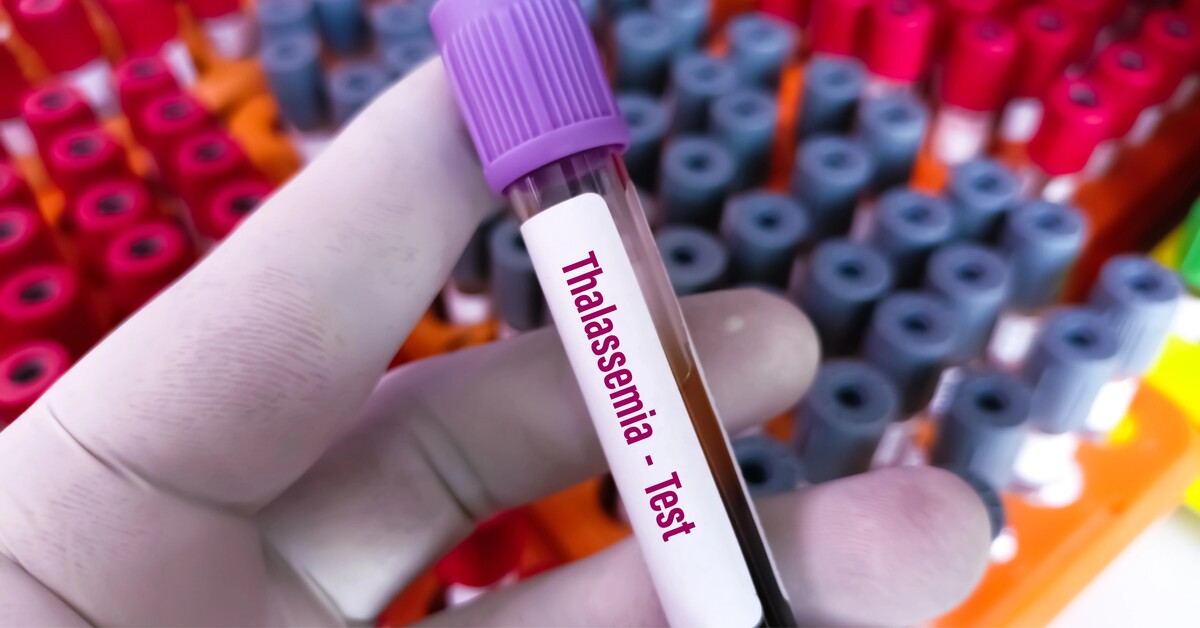
The gene responsible for thalassemia was identified with precision by the late 1980s. That early clarity made thalassemia gene therapy one of the first candidates for direct DNA intervention, and decades of research have since moved it from laboratory hypothesis to approved therapy. Two advanced medicinal products are now commercially available that allow patients to achieve independence from regular blood transfusions. CRISPR-Cas9-based editing technologies are pushing the field further still, toward fetal hemoglobin reactivation and, eventually, direct correction of the underlying mutation.
Thalassemia: what it is and why it is a candidate for gene therapy
Thalassemia is a monogenic blood disorder: a single gene mutation disrupts hemoglobin synthesis. Precision at the molecular level made it an early target.
Professor Giuliana Ferrari, Full Professor of Molecular Biology at Vita-Salute San Raffaele University and Group Leader at the San Raffaele Telethon Institute for Gene Therapy (SR-Tiget), frames the timeline clearly. Thalassemia and sickle cell disease, she explains, «were the first genetic diseases to be considered candidates for gene therapy from the late 1980s onwards», in part because they were among the first conditions in which the responsible gene and the type of mutation had been precisely identified.
The disease also carries a heavy clinical burden. In its more severe forms, it requires regular transfusions from early childhood and lifelong chelation therapy.
How ex vivo thalassemia gene therapy with lentiviral vectors works
The first effective approach developed for thalassemia used lentiviral vectors: derivatives of HIV, modified to be replication-incompetent, engineered to deliver a functional copy of the hemoglobin gene into the patient’s stem cells.
The process is sequential. Hematopoietic stem cells are collected from the patient and genetically modified in culture. They are then reinfused after a conditioning chemotherapy regimen designed to clear space in the bone marrow, eliminating resident cells so that the corrected ones can engraft and proliferate.
This approach matured through the combined work of academic centres and long-term research programmes. The first clinical trials launched approximately a decade ago. Follow-up data now extends well beyond the initial observation windows.
From basic research to clinical outcomes: transfusion independence
The results of this first generation of thalassemia gene therapy are well documented. In the Phase 3 trials HGB-207 and HGB-212, 90% of patients treated with betibeglogene autotemcel achieved transfusion independence (Locatelli et al., “Betibeglogene Autotemcel Gene Therapy for Non-β0/β0 Genotype β-Thalassemia,” NEJM, 2021). On the basis of these and other results, the first advanced therapy medicinal product in this field, Zynteglo, received regulatory approval and is now available in the United States. Other clinical trials with similar products have shown encouraging results and will be further developed.
For patients, the change is concrete: no regular transfusions, and a significantly improved quality of life.
CRISPR-Cas9 in thalassemia gene therapy: reactivating fetal hemoglobin
In recent years, CRISPR-Cas9-based genetic editing has expanded what is possible. Unlike lentiviral therapy, which delivers an additional functional copy of the gene, CRISPR modifies the genome already present in the patient’s cells. For thalassemia, the most widely used approach does not correct the mutation directly. It reactivates a gene that is normally silenced after birth: the gene for fetal hemoglobin.
During human development, hemoglobin transitions through several forms: embryonic, fetal, and finally adult. After birth, the fetal hemoglobin gene is progressively silenced.
The CRISPR strategy exploits this mechanism. By targeting a genetic repressor, it reopens an expression programme normally closed after birth. «By inactivating this repressor,» Professor Ferrari explains, «fetal hemoglobin is once again expressed in adults».
The result is functionally relevant: fetal hemoglobin can carry oxygen and compensate for the defect. It does not, however, address the root cause. The mutated gene from which the pathology originates remains uncorrected.
The next step: correcting the thalassemia mutation directly
Researchers are now working toward a more ambitious objective: direct correction of the genetic mutation itself. CRISPR-derived tools make it possible to replace the defective sequence with the correct one. Thalassemia remains one of the central test cases for gene medicine as a whole. Progress in the precision of genetic editing is measured, in part, by the ability to resolve a mutation that researchers have understood for decades.